Wild Irish Roses at Sunrise in County Clare
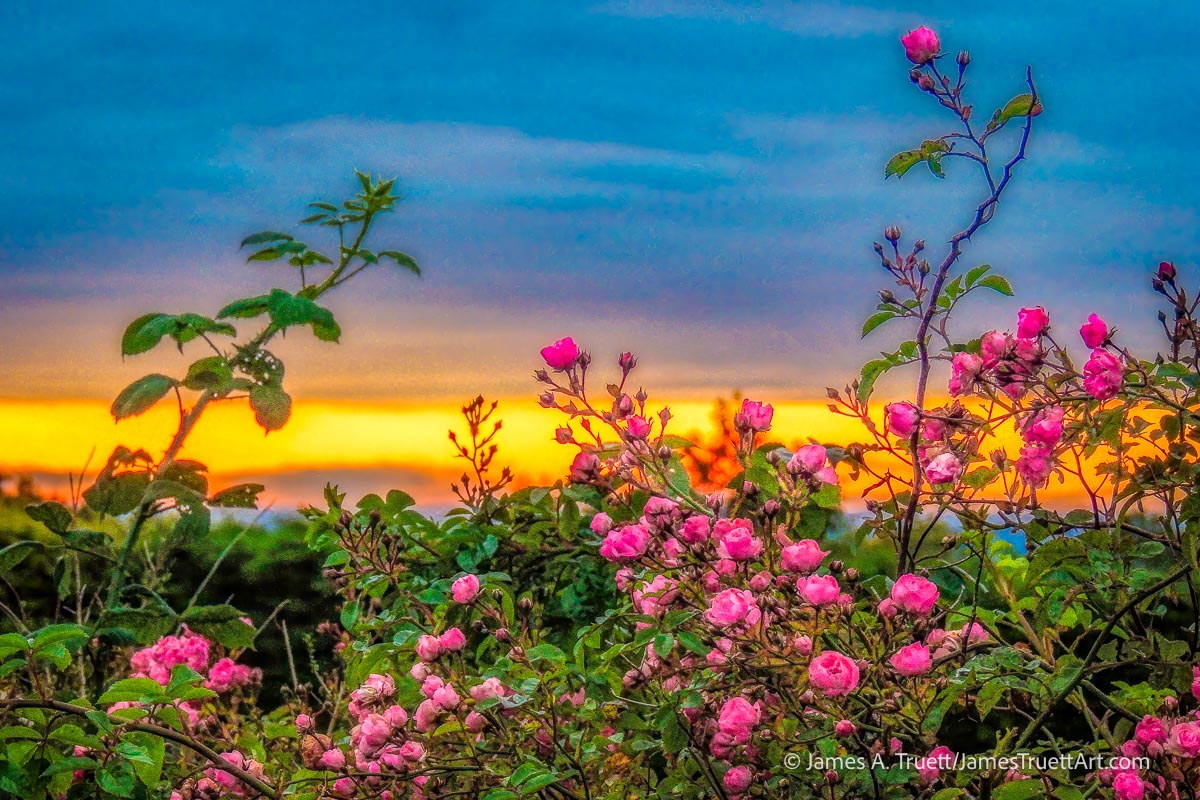
The countryside above Lissycasey was still holding on to the night when I stepped out into the crisp morning air. A trace of mist lay along the distant horizon, and the hedgerows were little more than dark shapes against the slowly brightening sky.
Then the sun found the roses.
For a few brief minutes, the rising light passed through their leaves and small crimson blossoms, turning the entire bush into a tangle of glowing colour. The fields beyond remained quiet and subdued, which made the roses appear brighter still—as though they had been waiting for the morning to notice them.
I had certainly been waiting for them.
Waiting for the Right Morning
I had watched this particular rose bush for several summers. Photographing a familiar place often works that way. You notice the possibilities long before the conditions decide to cooperate.
The roses needed to be in full bloom. The morning needed to be clear enough for the sun to reach them, yet soft enough to preserve the countryside's atmosphere. I hoped for a little mist as well, but not so much that the landscape disappeared.
Each requirement was simple on its own. Persuading them all to arrive together was another matter.
That morning, they did.
The sun rose in a brilliant wash of yellow and orange, backlighting the flowers and revealing the delicate edges of the leaves. Beyond them, the mist lingered just visibly on the horizon. It was the scene I had imagined, but imagination had not prepared me for how cheerful the roses would look in that first light.
Roses in the Irish Hedgerows
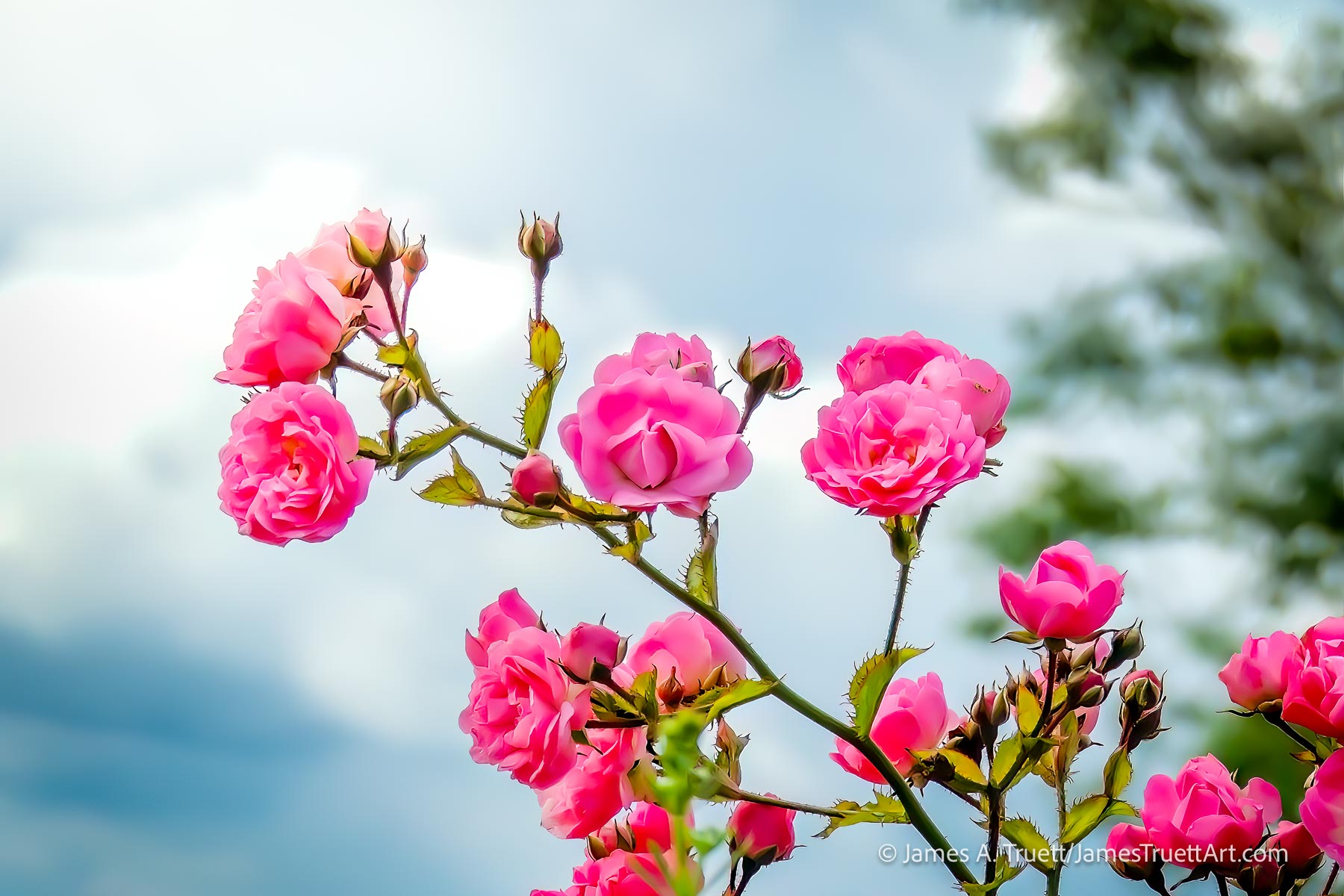
Roses are wonderfully at home in the Irish countryside. Native species such as dog rose and burnet rose flower in shades of white and pale pink, while cultivated varieties have escaped gardens over the years and made themselves comfortable along roadsides, rough ground and hedgerows.
The rose above Lissycasey is believed to be ‘Excelsa,’ an introduced rambling variety rather than one of Ireland’s native wild roses. Its clusters of deep pink or crimson flowers appear from June into August, cascading over surrounding vegetation with little concern for tidy boundaries.
That distinction matters botanically, but it does not diminish the pleasure of finding it. A garden escape can become part of the visual memory of a place, especially after years spent weaving itself into an old hedge.
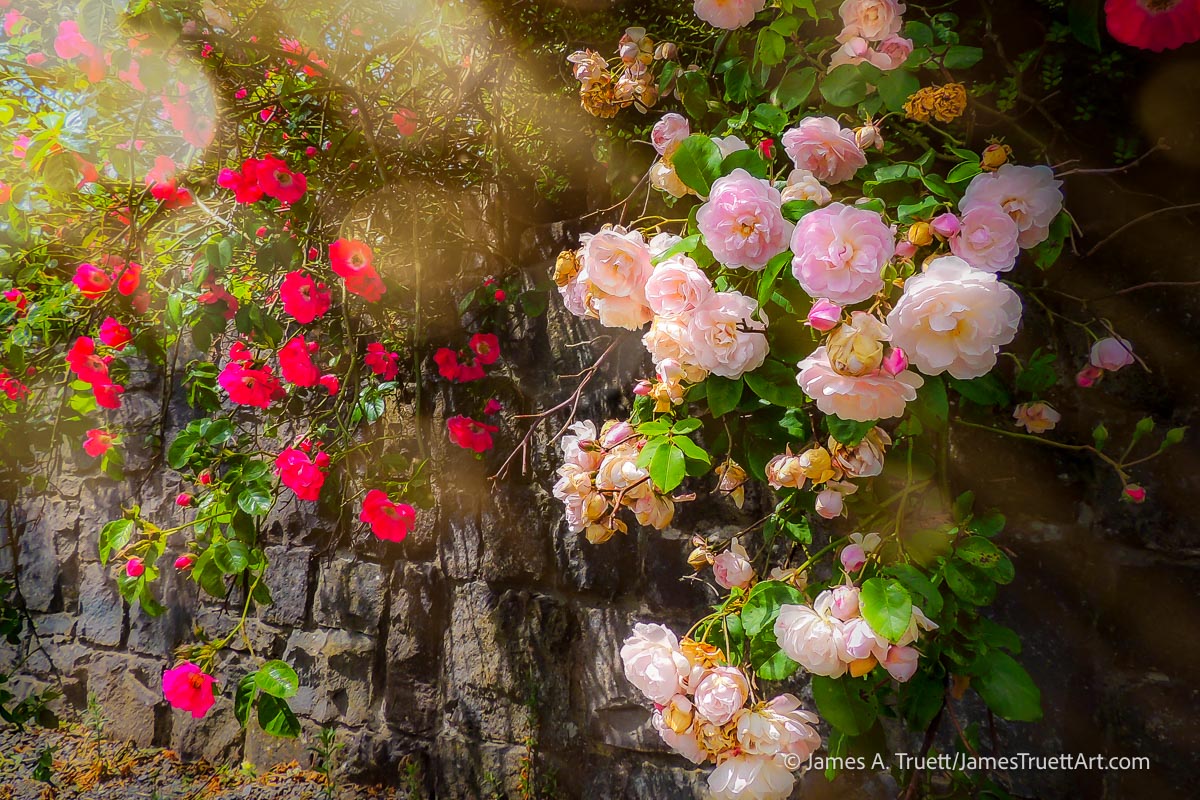
I love coming across roses spilling over stone walls or pushing through roadside greenery. Their stems may be thorny and unruly, but the flowers seem almost weightless. Against the many greens of an Irish summer, even a small patch of colour can completely change the character of a lane.
The Song That Follows the Flower
Of course, it is nearly impossible for me to see such a rose without hearing “My Wild Irish Rose” somewhere in my mind.
The song was written by Irish-American singer, actor and songwriter Chauncey Olcott and published in 1899. Olcott performed it in his stage production A Romance of Athlone, and its gentle melody soon travelled far beyond the theatre.
Olcott built much of his career around songs and stage stories inspired by Ireland. He later collaborated on another enduring favourite, “When Irish Eyes Are Smiling.” Decades after his death, his life inspired the 1947 Warner Bros. musical My Wild Irish Rose. The film’s score received an Academy Award nomination, and Olcott was inducted into the Songwriters Hall of Fame in 1970.
Songs have a curious way of attaching themselves to landscapes. Once that happens, a few notes can summon a place, and a flower beside a country road can bring back a melody written more than a century ago.
For me, the connection now works in both directions. The song suggests the roses, and the roses immediately begin the song.
When the Ordinary Becomes the Picture
The moment I remember most from that morning was not simply the sunrise or the colour. It was the realisation that the scene had been there all along.
I had passed that hedge many times. On most days it was one small element in a broad County Clare landscape. Yet with the roses in bloom and the light arriving at precisely the right angle, it became the heart of the countryside around it.
That is one of the reasons I return to places. Familiarity does not exhaust a landscape. It teaches you where to look—and sometimes, if you are patient, when to look.
The resulting image helped inspire Nature’s Summer Tapestry, from my Impressionist Works collection. In that artwork, colour, foliage and light gather into the layered pattern I so often find in the Irish countryside: nothing arranged, nothing perfectly contained, yet everything contributing to the whole.
The roses above Lissycasey reminded me that beauty does not always announce itself with grandeur. Sometimes it grows into a hedge, waits through several summers and catches the sun for a few minutes on an otherwise quiet morning.