Why Is Ireland Always Green? It’s Not Just the Rain
The first thing I noticed when I arrived in Ireland in 2006 was the green.
Of course, I had expected to see it. Ireland is the Emerald Isle, after all. Yet the familiar nickname had not prepared me for the intensity of the colour. The fields did not appear merely green; they seemed to hold their own light.
It is still one of the observations I hear most often from first-time visitors. They look through the window as the countryside passes and ask the same question: How can Ireland be this green?
The obvious answer is rain. Anyone who has spent much time here knows that Ireland receives its fair share. But rain is only part of the story.
A Climate Made by the Atlantic
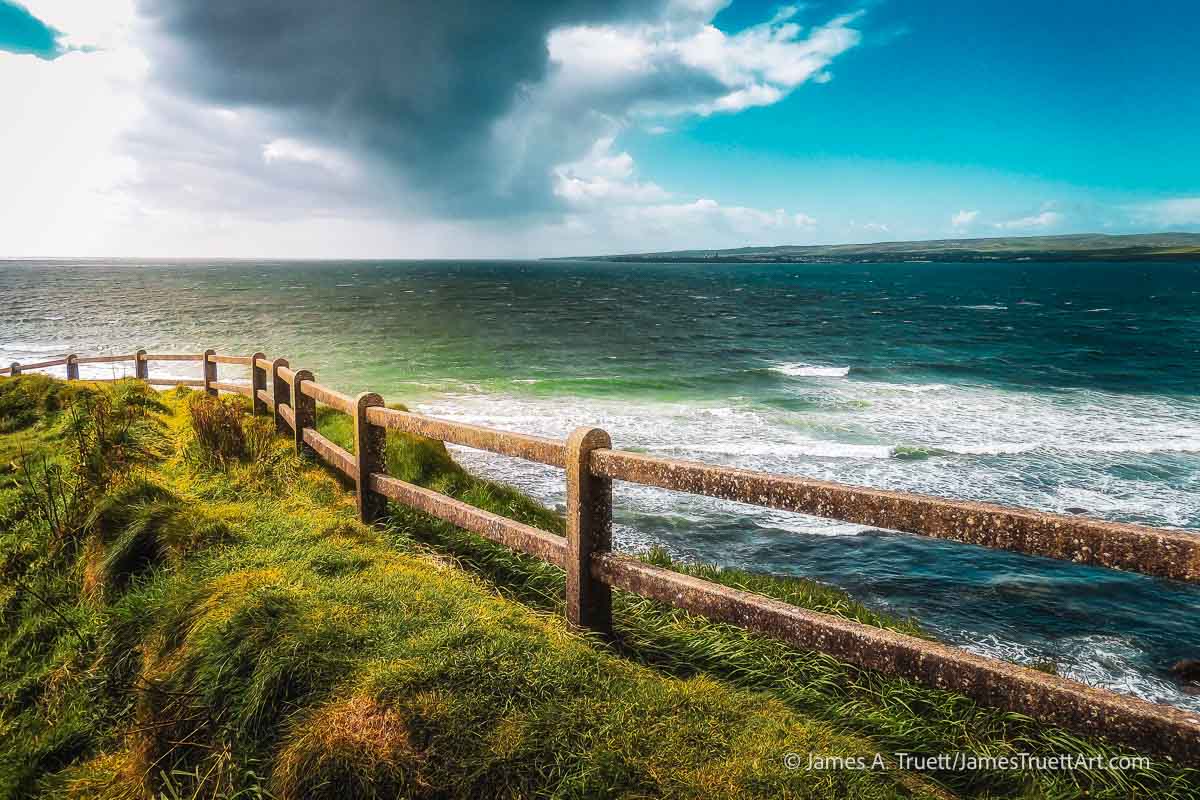
Ireland lies far enough north that its winters might reasonably be expected to feel much harsher. Instead, the surrounding Atlantic Ocean acts as a great moderator, softening both winter cold and summer heat.
The warm North Atlantic Drift also influences sea temperatures around the island. According to Met Éireann, this maritime setting helps protect Ireland from the temperature extremes experienced by many places at a similar latitude. Winters tend to be cool rather than relentlessly frozen, while summers are generally mild.
That narrow range of temperatures matters.
Grass can continue growing during periods when the fields of colder countries lie dormant beneath frost or snow. Regular rainfall keeps moisture in the soil, while the absence of prolonged heat reduces the chance of the landscape drying to brown. There are exceptions, naturally. A dry summer can leave its mark, and winter has its sharp mornings. Ireland is never as predictable as its reputation suggests.
Still, mild air, Atlantic moisture and a long growing season combine to keep green close to the surface throughout much of the year.
Green Is Only the Beginning
As an artist, green was never my favourite colour. It can be difficult to use well. Too much of one shade can flatten an image or overwhelm everything around it.
The Irish landscape taught me to look at it differently.
Here, green is not a single colour. It is the base canvas.
In spring, new growth adds sharp yellow-green notes to the fields and hedgerows. Bluebells, primroses and wild garlic begin appearing in unexpected places. Summer deepens the palette, setting pinks, reds and yellows against darker foliage. Even in autumn, when beech and sycamore leaves turn copper and orange, the green remains underneath—quieter perhaps, but rarely absent.
Then there is the sky.
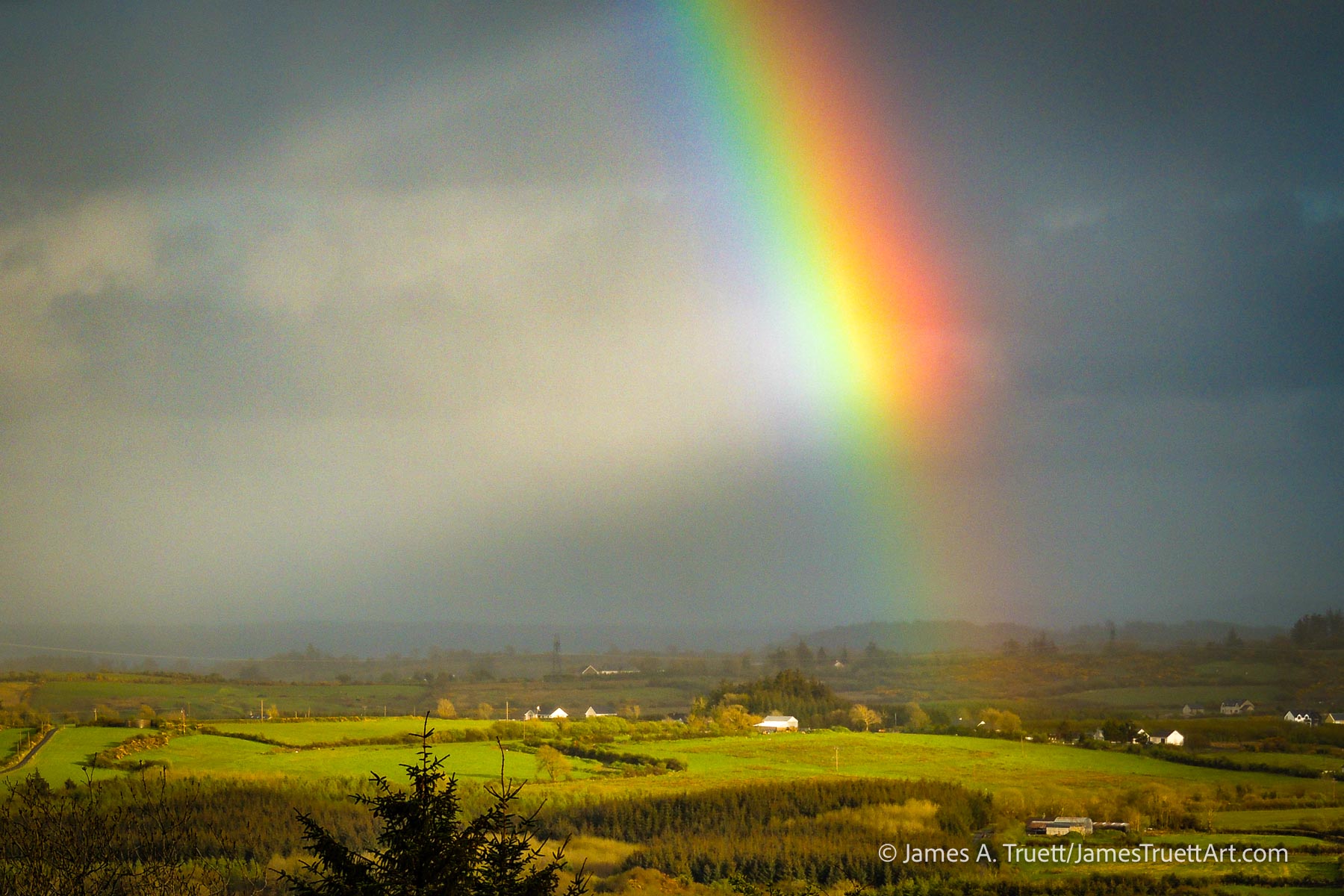
Clouds are continually rearranging Irish light. A hillside that appears dark and subdued at breakfast may turn luminous by noon, then disappear behind rain before supper. Light moves across the land in broad patches, picking out one field, stone wall or distant stand of trees while leaving everything around it in shadow.
The scenery may be familiar, but the picture is never quite repeated.
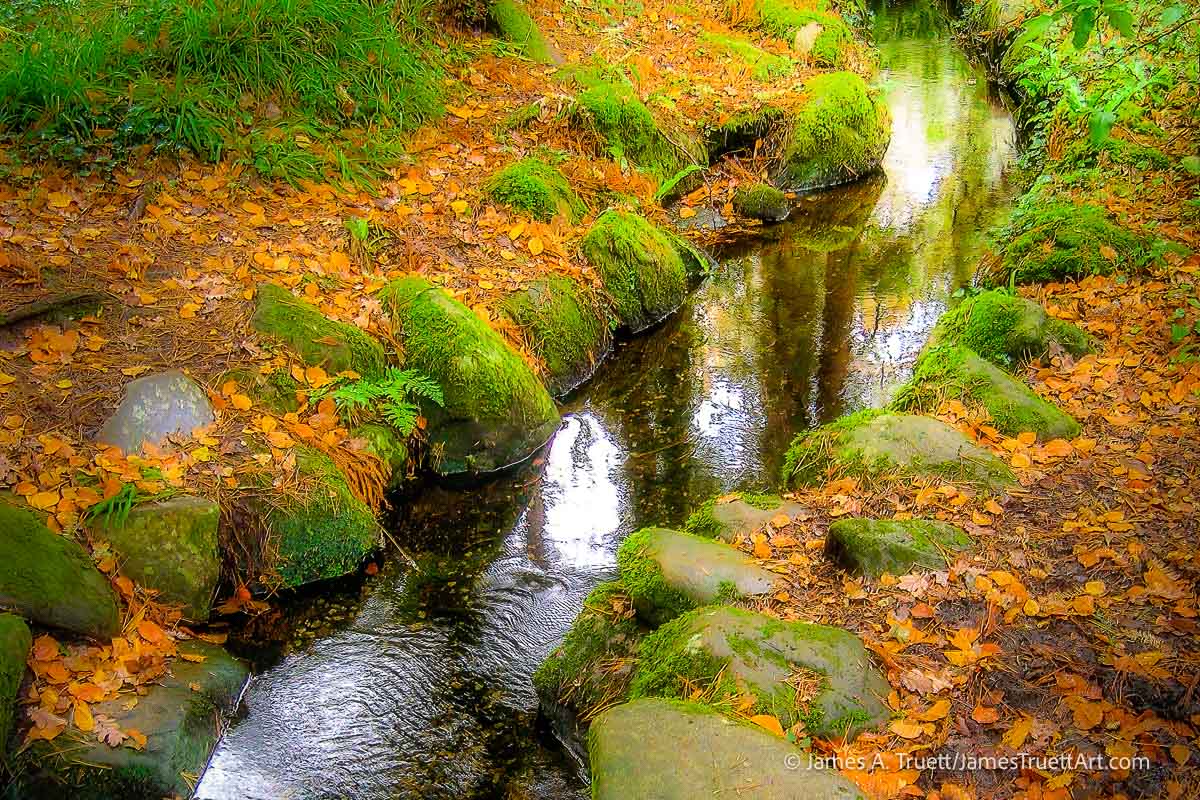
Where Green Grows Wild
Some of Ireland’s most revealing landscapes show that this abundance is not limited to pasture.
In County Kerry, Killarney National Park spreads across approximately 10,000 hectares of mountains, lakes, waterfalls and woodland. The lands presented to the State in 1932 became Ireland’s first national park. Its ancient oak and yew woods flourish in the mild, damp conditions of the southwest, with mosses, liverworts and lichens covering trunks and branches in dense, intricate layers.
Walking through those woods, green seems to occupy every available surface. It grows underfoot, climbs the trees and hangs from old limbs. Even stone begins to look alive.
The Burren in County Clare offers a wonderful contradiction. At first glance, its great terraces of pale limestone appear almost bare. Look more closely, and plants emerge from the narrow fissures, known as grikes, where they find shelter and moisture.
Around three-quarters of Ireland’s plant species are represented in the Burren. Arctic-alpine plants grow beside species associated with southern Europe, creating combinations that seem botanically improbable. The National Parks of Ireland records mountain avens sharing this landscape with bloody cranesbill and the Mediterranean-centred dense-flowered orchid.
The Burren demonstrates that Ireland’s green character is not simply a matter of lush fields. Life here has learned to occupy woodland, bog, pasture and even the cracks between stones.
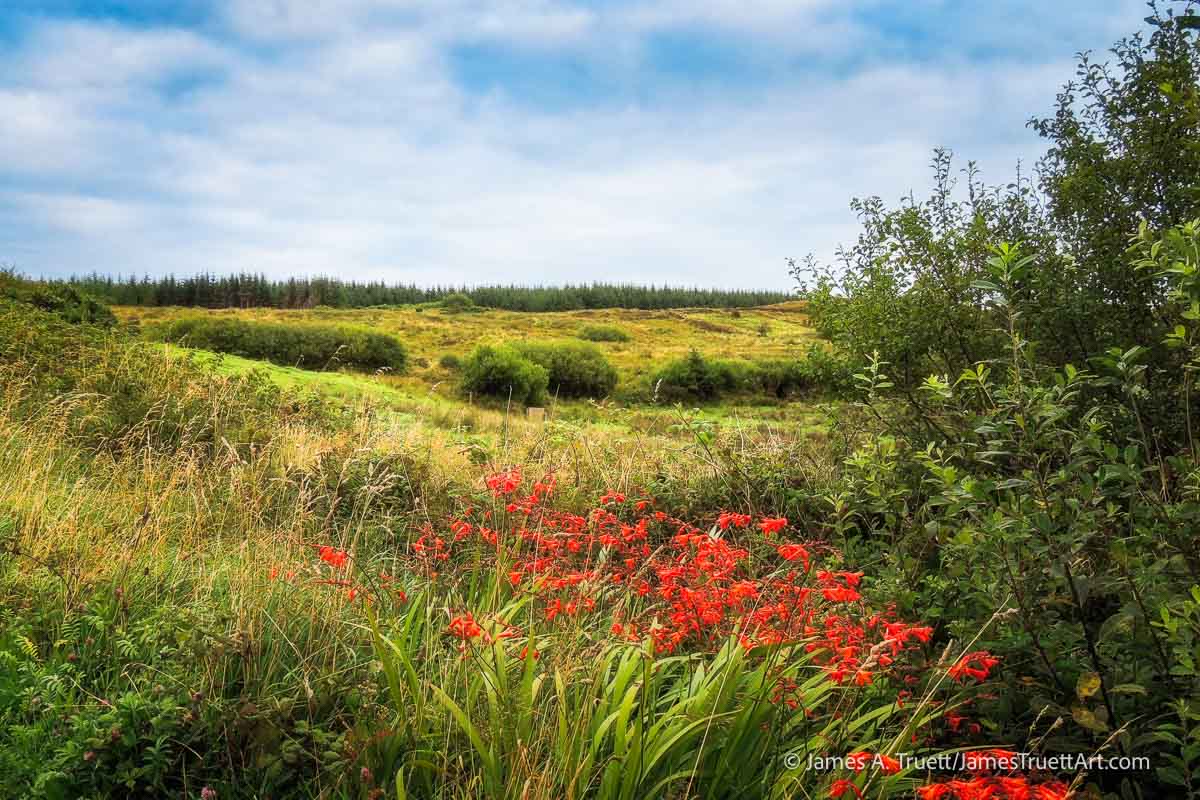
Learning to See the Colour
My realisation came gradually. Ireland does not stay green because the landscape never changes. It stays green while changing constantly.
That distinction altered the way I looked at it.
The green is a foundation rather than a finished picture. Weather brings the movement. Seasons provide the accents. Flowers, autumn leaves, wet stone and restless skies add colour and texture. Even rain contributes more than water; it darkens tree bark, sharpens distant fields and leaves the roads reflecting whatever light breaks through afterwards.
After years of living here, I still find myself pausing at scenes I have passed many times. A brief opening in the clouds can make an ordinary field look newly discovered. Moss on an old wall can reveal more shades than I once thought one colour could hold.
Perhaps that is why Ireland seems always green. It is not because the island remains unchanged, nor simply because it rains. It is because green persists through the changes, quietly holding the composition together.
And once you begin to notice the differences within it, no two Irish greens look exactly alike.