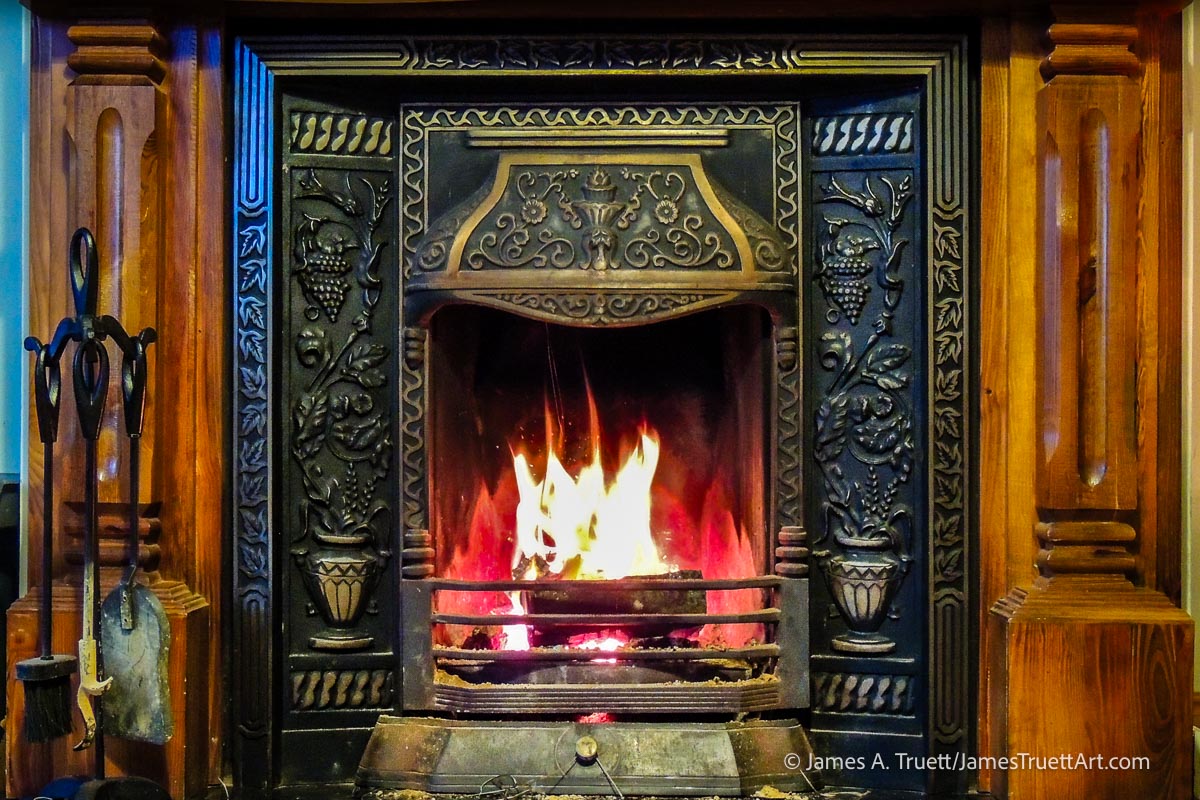
The Earthy Warmth of an Irish Turf Fire
When the rain is blowing sideways across the County Clare countryside, and the light begins to fade far too early in the afternoon, I know exactly where I want to work: beside the woodstove, with a little turf and timber burning.
I call it “fireplace weather.”
The phrase has followed me for years. I was born in Interior Alaska, one of the coldest inhabited regions in the world, and I have also lived and travelled in places where winter is little more than a date on the calendar. Yet I eventually settled in Ireland, where the weather is cool, wet and inclined to change its mind several times before lunch.
Perhaps the fireplace had something to do with it.
An Aroma That Says Ireland
There is a distinctive moment in autumn when the mornings become crisp and the first turf fires of the season begin warming neighbouring homes. Step outside early enough and their smoke mingles with the mist, carrying a sweet, earthy scent across the fields.
To me, few aromas say “Ireland” so immediately.
It is softer than the smell of heating oil and quite different from burning timber. Turf smells of the earth from which it came—ancient vegetation, rain and time compressed into dark, rough sods. Its fire burns slowly, casting a deep glow rather than making a great show of itself.
I remember photographing a frosty evening in a thatched cottage in Killarney, County Kerry, where the light from the fire settled warmly across the room. On my first visit to Ireland in 2006, before I moved here, I rented a restored stone cottage in County Kilkenny. Working beside its fireplace gave me my first taste of the quiet domestic comfort I would later come to associate with Irish winters.
Saving the Turf
Turf is the Irish name commonly given to peat cut from a bog for fuel. It forms extraordinarily slowly as partially decomposed plants accumulate in waterlogged ground. What appears to be a rather barren brown landscape can hold a record of thousands of years of natural history.
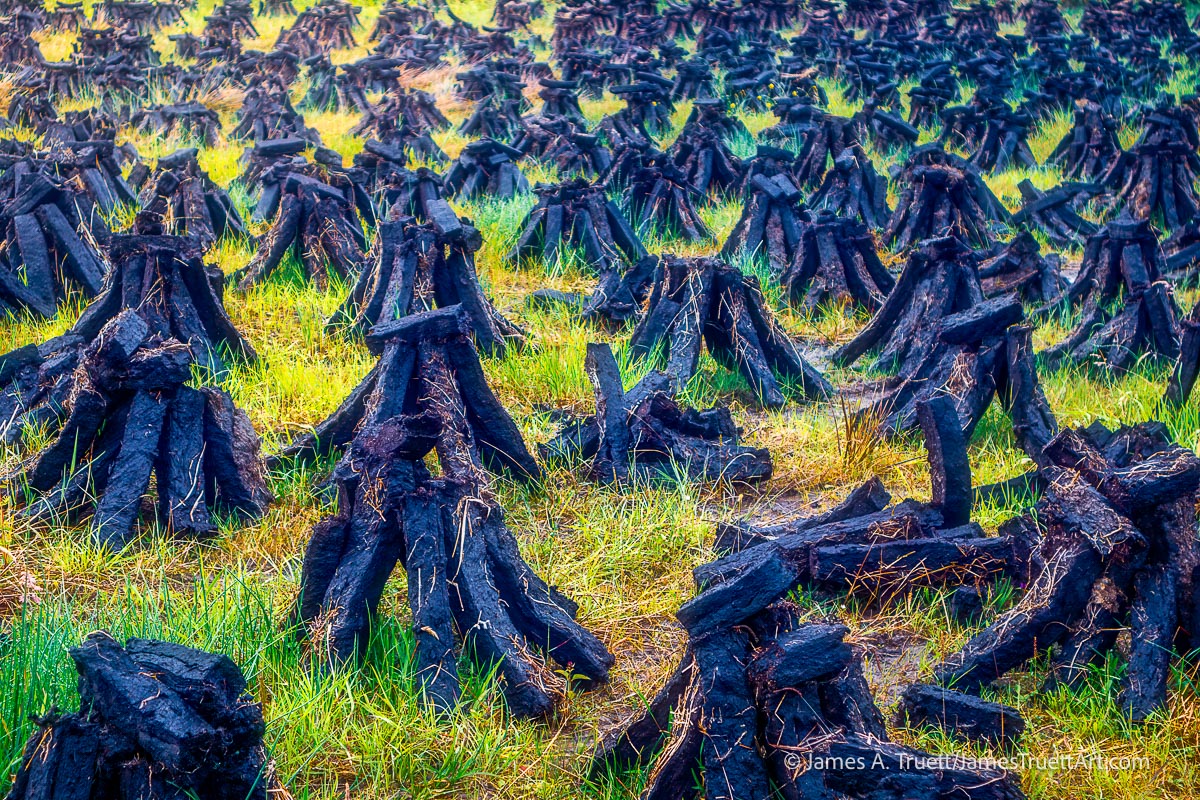
Traditionally, turf was cut with a sleán, a specialised two-sided spade. The wet sods were laid across the bog and turned so the sun and wind could begin drying them. Later they were “footed”—stood upright in small groups resembling rows of dark little tents—before being brought home and stored for winter.
Machines now perform much of the cutting, but saving turf still requires manual work and cooperative weather. The process once meant long, muddy family days in the bog, something recalled with affection by some people and considerably less romance by those who actually did the lifting.
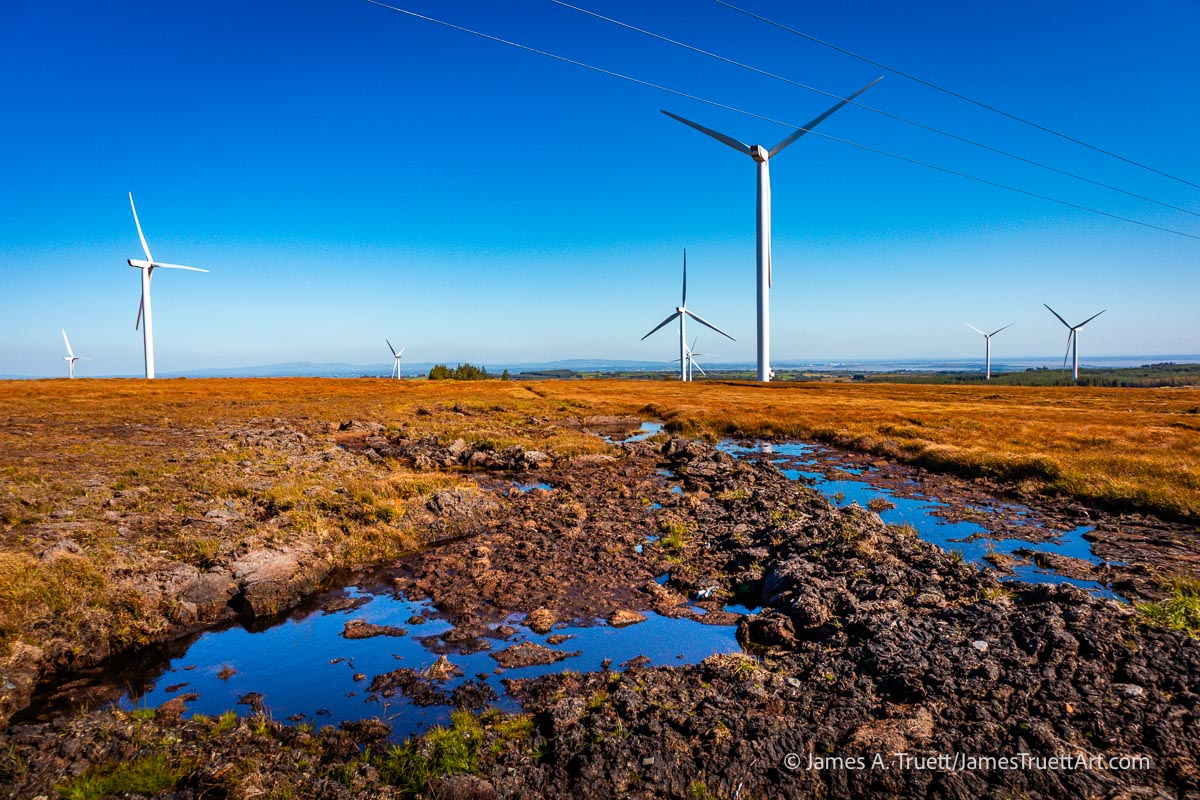
I have photographed footed turf drying in County Clare and an old, red-doored milking parlour now used to store turf and timber. At Boolynagleragh, above Lissycasey, I found another striking scene: cut bogland beneath modern wind turbines, two very different chapters of Ireland’s energy story sharing one landscape.
Warmth Inside, Atmosphere Outside
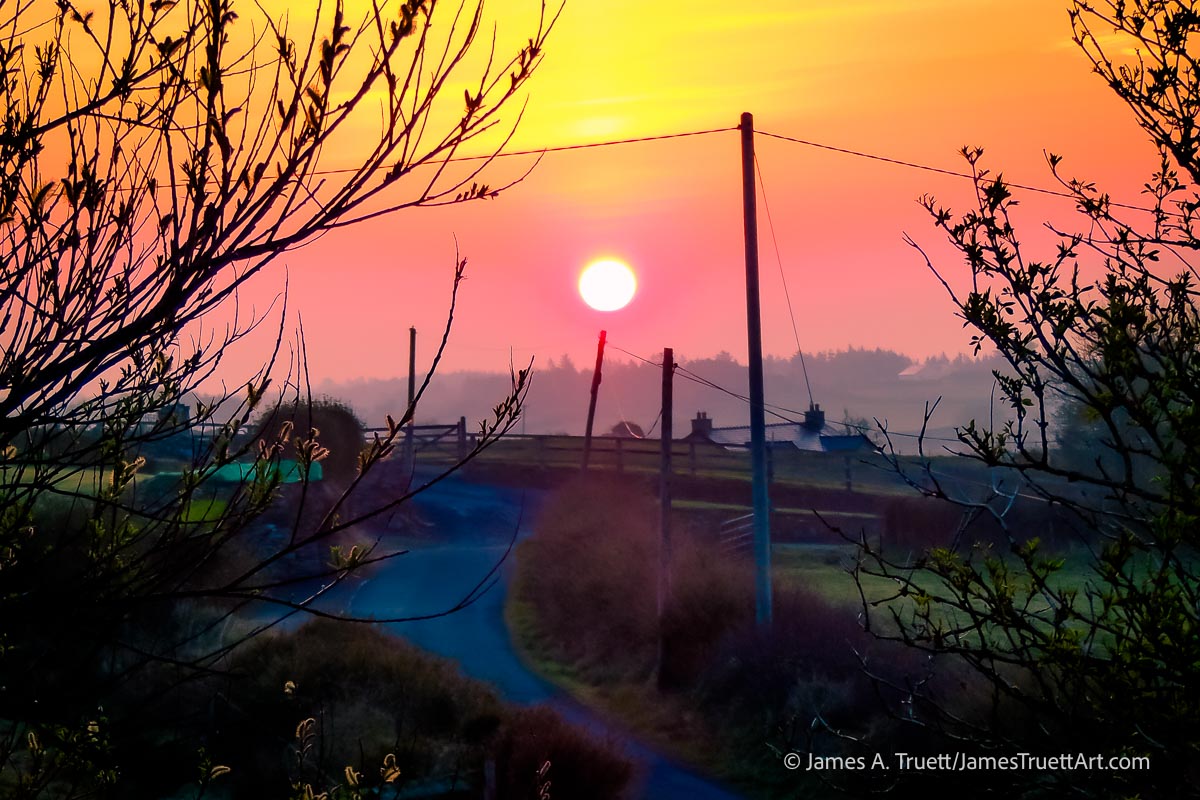
Turf changes more than the temperature of a room. Its smoke becomes part of the visual character of a winter morning.
I have watched the rising sun filter through mist and turf smoke over Decomade and Lissycasey. Near Kildysart, hard frost and a low haze softened the village beneath a dramatic winter sky. On another morning, the sun spread buttery-yellow light towards the distant Galtee Mountains.
Those conditions can transform familiar fields and roads. The location may be the same, yet the shifting combination of frost, cloud, smoke and light gives it an entirely different mood.
That may be what I value most about a turf fire. It provides physical warmth indoors, but it also makes us notice the season outside.
A Tradition in Transition
Nostalgia, however, does not remove consequence.
Peatlands store enormous quantities of carbon and support distinctive habitats. Draining and cutting them damages those stores, while burning turf contributes both carbon emissions and harmful fine-particle air pollution. Ireland’s Environmental Protection Agency identifies domestic peat and wood burning as important contributors to severe pollution events and stresses the value of protecting and restoring peatlands.
Ireland’s solid-fuel regulations do not impose a universal ban on possessing or burning turf. People with traditional turbary rights may continue customary practices where cutting is otherwise permitted, and turf may still be gifted or sold privately. Retail sales and advertising—including online advertising—are restricted, while cutting is prohibited or controlled on designated protected bogs. The Government’s explanation of the regulations and the National Parks and Wildlife Service guidance provide the relevant distinctions.
My neighbour occasionally brings me bags of turf, and I still enjoy burning a little from time to time. I prefer the irregular sods from the bog to compressed briquettes, which seem disconnected from the land and labour behind the tradition. But turf is dusty, produces ash and smoke, and cannot honestly be treated as an environmentally harmless source of comfort.
Perhaps that is the real story of the Irish turf fire: affection and unease occupying the same hearth.
Its aroma can still feel like a deep connection with the earth—a warm embrace on a cold evening—while reminding us that traditions, like landscapes, are not preserved by pretending they never need to change.
Sometimes seeing beauty everywhere also means seeing the whole picture.