Tromra Castle: Still Standing on the County Clare Coast
The path to Tromra Castle was doing its best to discourage us.
Rain had soaked the ground, and every step across the field brought another negotiation with mud. My cousins and I had been exploring Kilmurry-Ibrickane Graveyard, on the high ground above Seafield and Quilty, when I first noticed the castle in the distance.
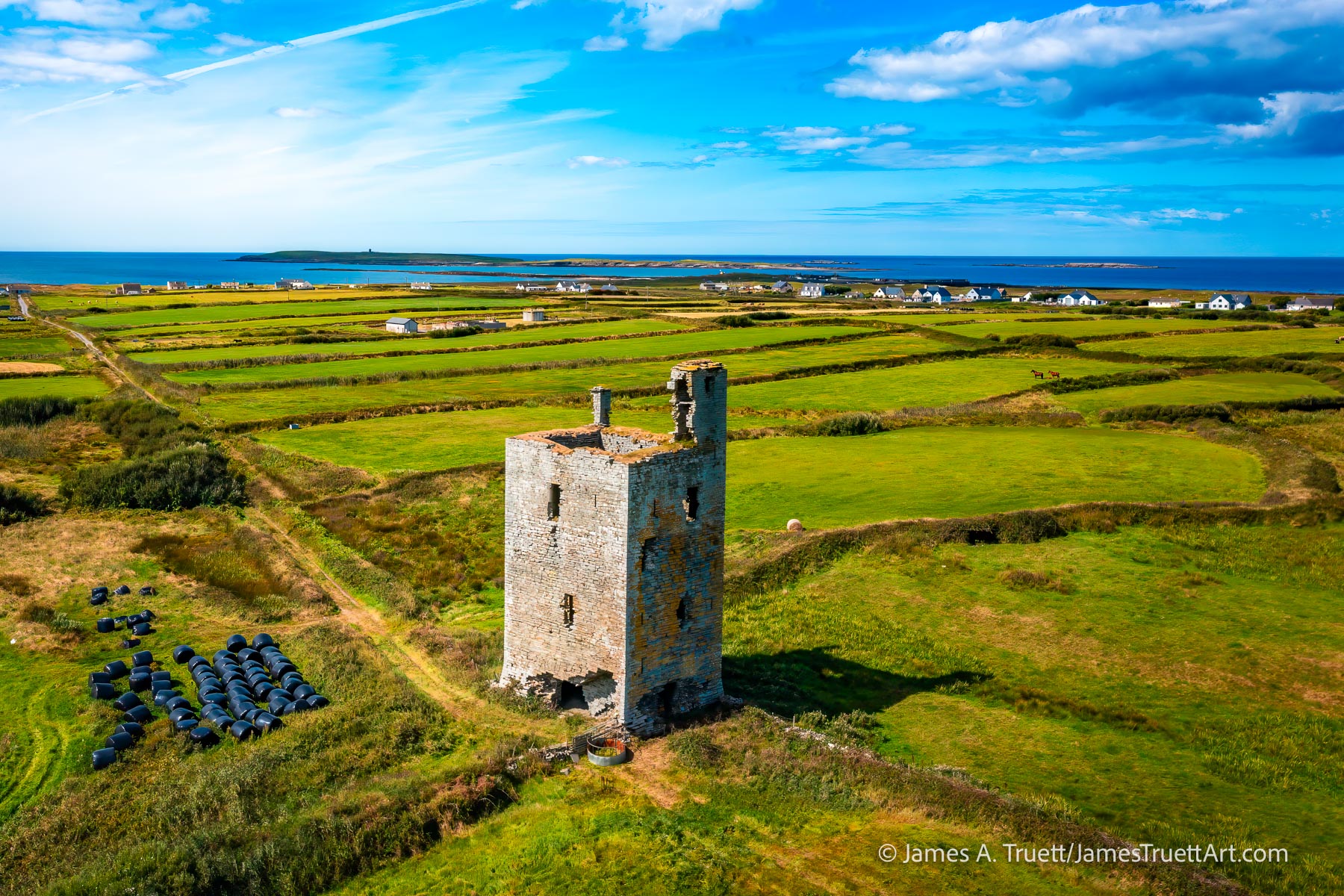
From there, it appeared remarkably intact—a solid medieval tower standing alone among working farmland near the Atlantic coast. It had the unmistakable presence of something that had watched the centuries pass without feeling any obligation to explain itself.
Naturally, I wanted a closer look.
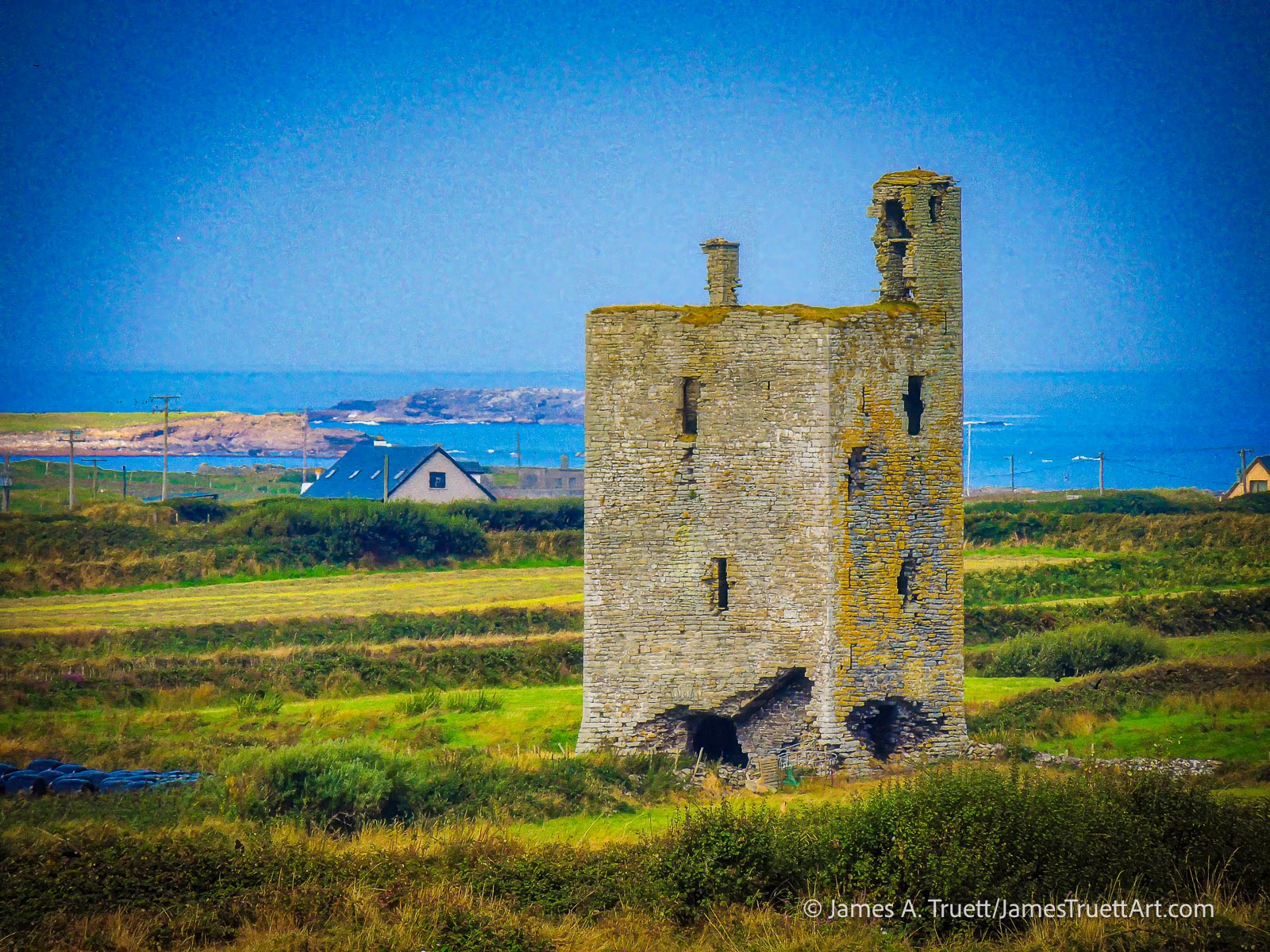
A Different Castle Up Close
Distance can be very generous to old buildings. It softens their fractures, conceals the missing stones and allows the imagination to complete whatever time has taken away.
As we approached Tromra Castle, its condition became clearer. An entire lower corner appeared to be missing. The opening was not a neat doorway or window but a great ragged absence, as though someone had taken a bite from the base of the tower.
And yet it remained standing.
That was the detail that held my attention. The castle looked impossibly vulnerable and stubbornly strong at the same time. Above the damaged corner, wall after wall of stone continued to rise against the grey Clare sky.
There was no grand entrance to the experience. No carefully laid path, visitor centre or explanatory sign waited to receive us. There was only the wet field, the weather and the tower itself.
That suited the place.
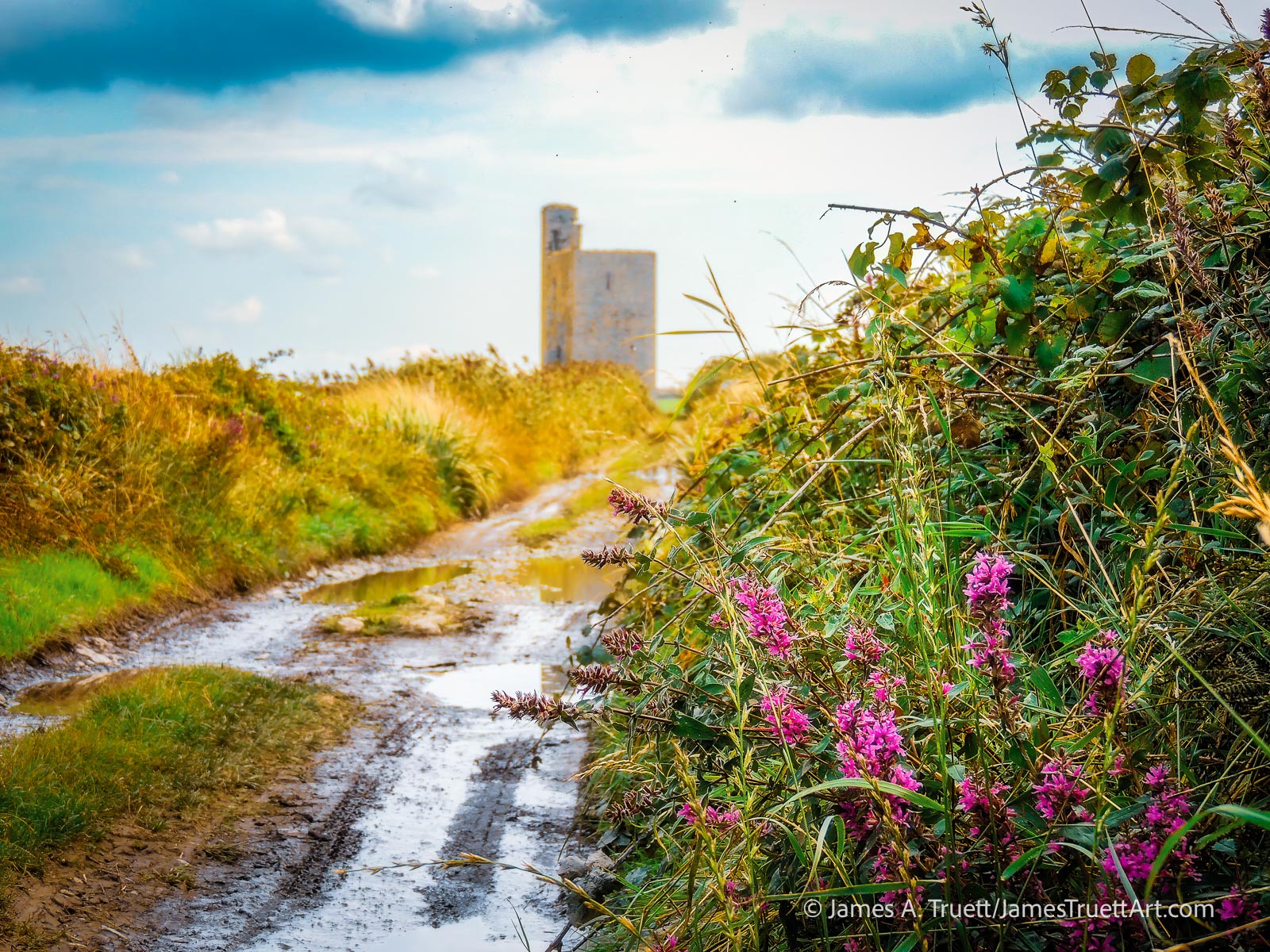
A Tower Built by Hand
Tromra Castle is a late fifteenth-century tower house, probably built sometime between 1460 and 1490. The place-name appears in records much earlier, including a reference from 1215, although the structure standing today belongs to the later medieval period.
The castle is associated with the O’Briens and the shifting alliances of Thomond. Like many Irish tower houses, it was more than a residence. It was a declaration of position, protection and authority in a landscape where ownership could change through inheritance, political manoeuvring or violence.
Its masonry is made from the thin, regular flagstones found throughout this part of County Clare. Every stone had to be quarried, shaped, lifted and placed through human effort. Standing beside those walls, it is difficult not to think about the people behind the architecture—the builders whose names were not recorded but whose work has endured for more than five centuries.
Modern machinery can make construction appear almost effortless. Tromra offers no such illusion. Its walls retain the weight of their making.
Conflict Within the Walls
The castle’s history was not peaceful. In 1642, it was attacked by Edmond O’Flaherty and his followers. A small group inside resisted, and the confrontation ended in death, capture and plunder. Seven occupants were ultimately brought to safety, but members of the Ward family were killed during the assault.
Ownership continued to change in the years that followed. The castle was later held by Samuel Burton, and in 1712 it was granted to Alice Burton. These names form only part of a complicated history preserved by the antiquarian Thomas Johnson Westropp in his account of Tromra Castle.
The surviving tower is therefore not simply an attractive ruin. Its broken interior once held storerooms, stairways, private chambers and people attempting to defend themselves. Seen in that light, the missing stones begin to feel less picturesque. They belong to a building that was used, contested and altered by real lives.
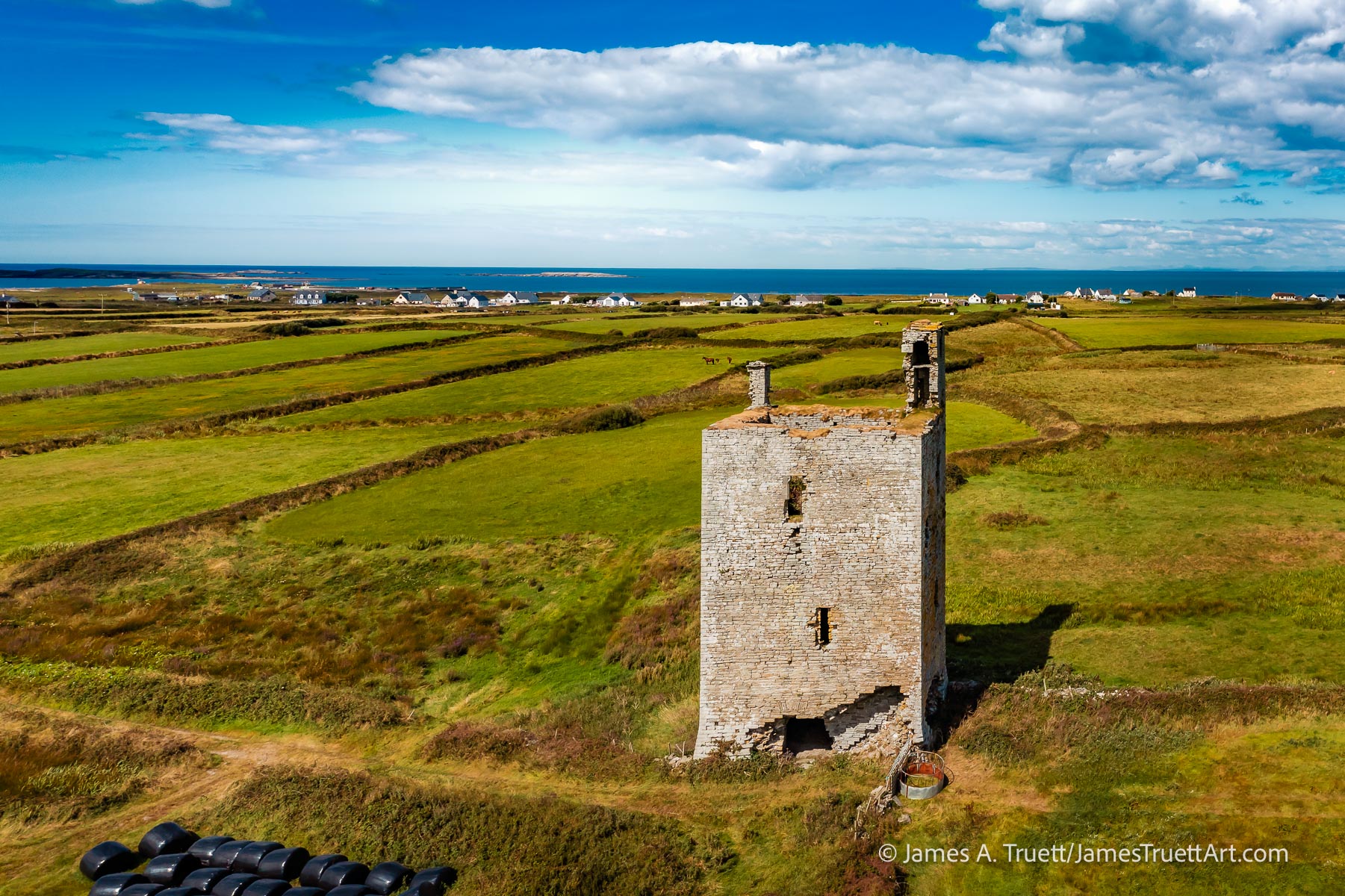
The Sea Beyond the Castle
The Atlantic adds another layer to Tromra’s story.
In September 1588, the San Marcos, one of the ships of the Spanish Armada, was wrecked near Seafield after striking a reef between Mutton Island and the mainland. Hundreds of men were aboard, and only a handful are believed to have reached the shore alive.
The castle would have stood within sight of that coast.
I found myself looking from the tower towards the sea and imagining the confusion of that day: the gale, the ship searching for shelter, and those on land witnessing a disaster they were powerless—or perhaps unwilling—to stop.
The landscape does not announce any of this. Fields continue towards the water. Weather moves in from the Atlantic. Cattle graze where generations before them grazed. History here is not separated from ordinary life; it lies directly beneath it.
What the Missing Corner Revealed
I had first been drawn towards Tromra because it looked so complete from the graveyard. Up close, I became interested in it precisely because it was not.
The missing corner changed the way I saw the castle. Its strength was no longer about remaining untouched. It was about continuing to stand after damage, abandonment and centuries of Atlantic weather.
That may be why ruins hold our attention. Perfection tells us what something was intended to be. A ruin shows us what it has survived.
Tromra Castle did not need to be restored in my imagination. The rain-darkened stones, the exposed interior and even that alarming gap at its base were part of its character. They allowed the building’s long life to remain visible.
When I think back on that day, I remember the mud, the grey light and the unexpected pleasure of following curiosity across a field. We had gone to explore an old graveyard and found ourselves standing beside a medieval tower with an Armada story offshore.
Places often reveal themselves that way — not through a planned arrival, but through the simple decision to take a closer look.