Quin Abbey: Where History Holds the Light
Quin Abbey was one of the first historic abbeys I visited after moving to County Clare nearly twenty years ago. I have returned at least a dozen times since, yet I have never felt that I was walking into exactly the same place.
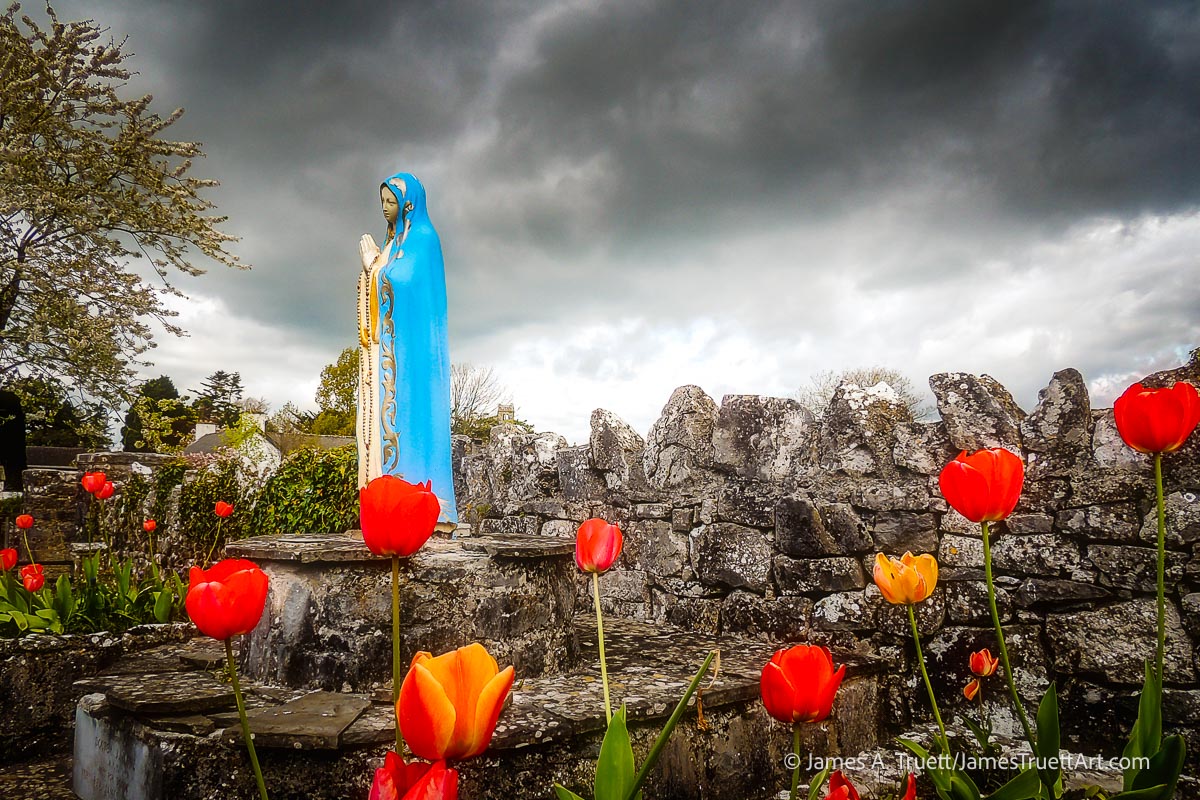
On one visit, a boiling dark sky seemed to press down upon the tower. On another, spring tulips surrounded the statue of the Virgin Mary near the entrance. Summer brings bright flowers to the village, while rain turns the old limestone a deeper grey. Within the cloister, sunlight may fall across a grave and illuminate the carved arches for only a few moments before the clouds close again.
Quin Abbey changes with the Irish weather, but something of its past is always present.
Beyond the Painted Gate
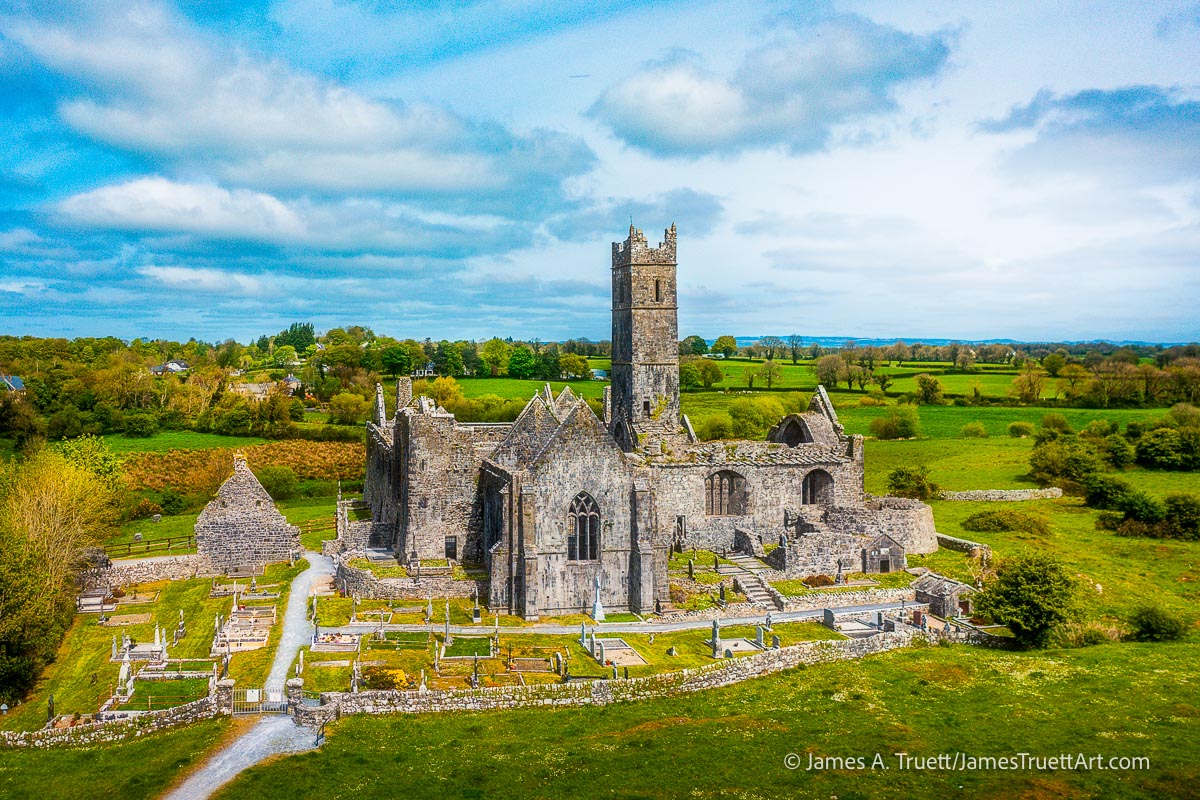
The approach offers little warning of the scale of the ruins ahead. A painted iron gate opens to a winding path leading to the ruins, with the tall medieval tower of Quin Abbey rising skyward.
Inside, the atmosphere shifts.
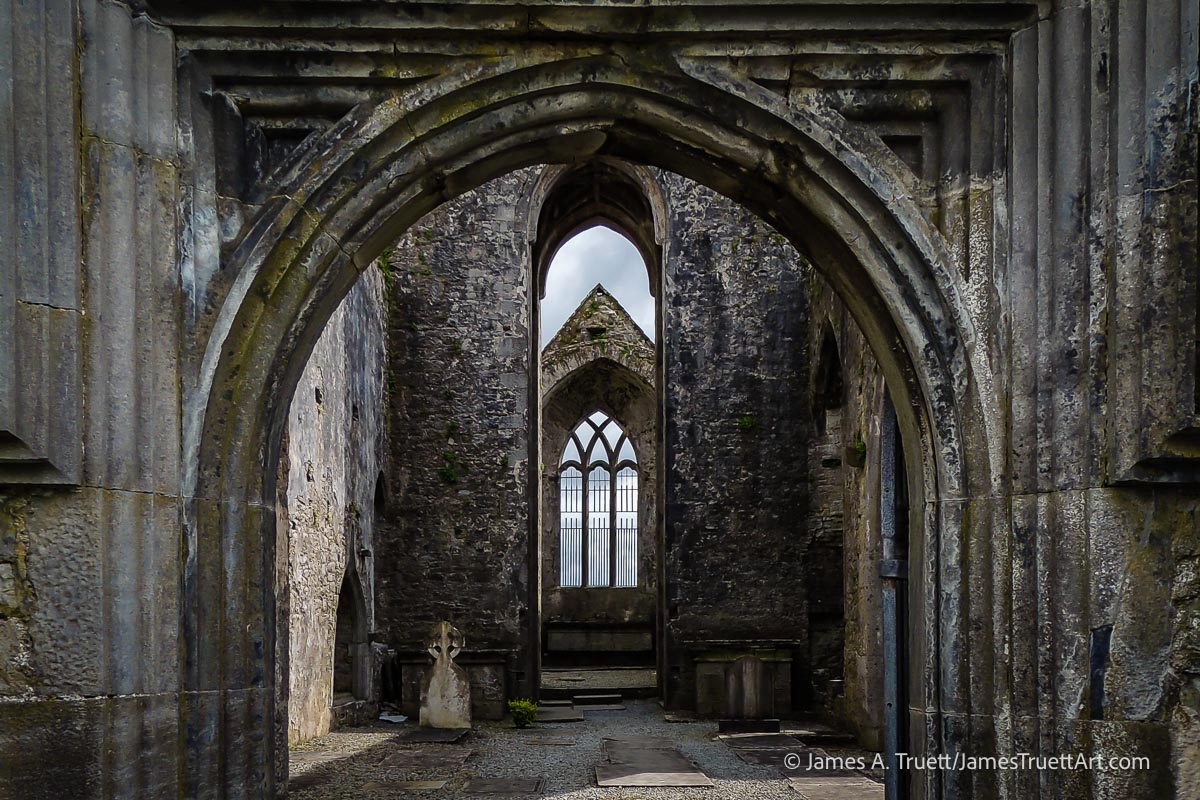
Elegant arches surround the cloister, while narrow passages lead into darker chambers. Weathered memorials and grave slabs appear beneath your feet and within the walls. Some parts feel peaceful; others are undeniably ominous. Even without knowing the history, you sense that these stones have witnessed far more than quiet religious devotion.
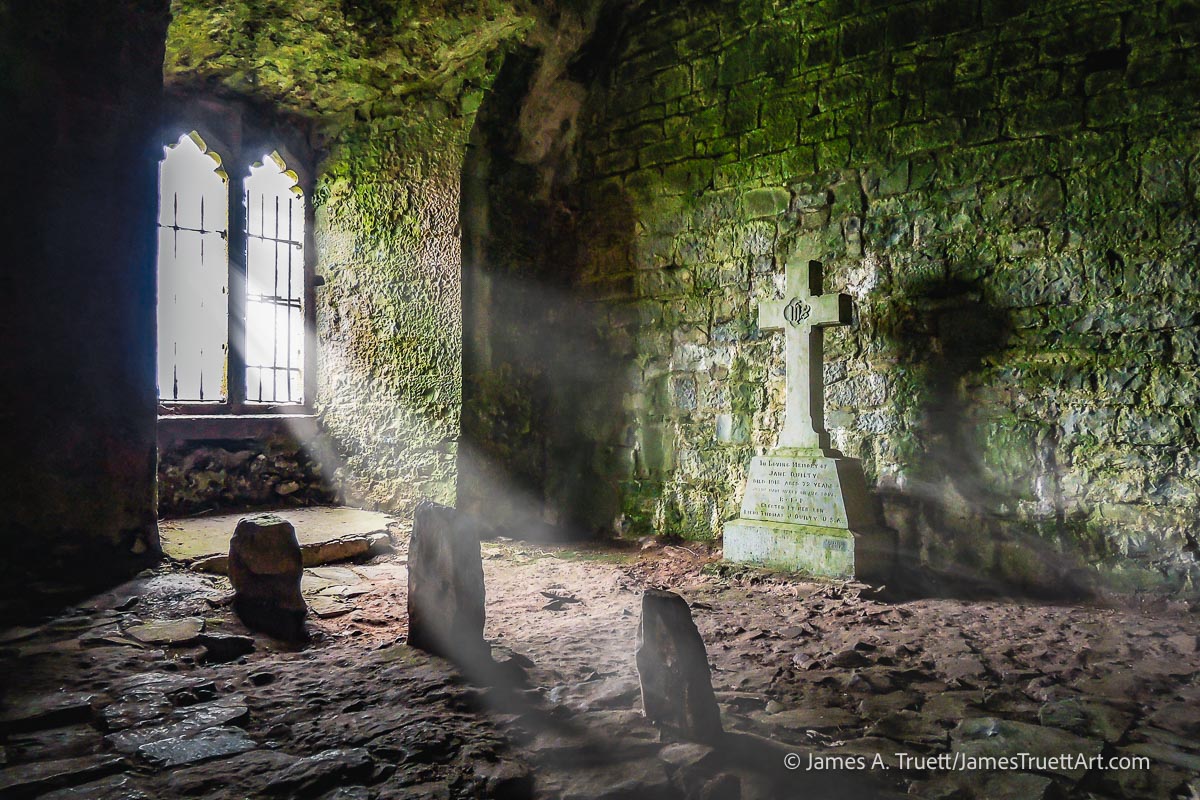
The building is roofless now. Rain reaches the ground where friars once walked, and sunlight streams through openings that may once have held stained glass. Yet enough survives to form a remarkably complete picture of the community that lived, prayed and studied here.
A Castle Recast in Stone
The history of Quin Abbey reaches back well before the present friary.
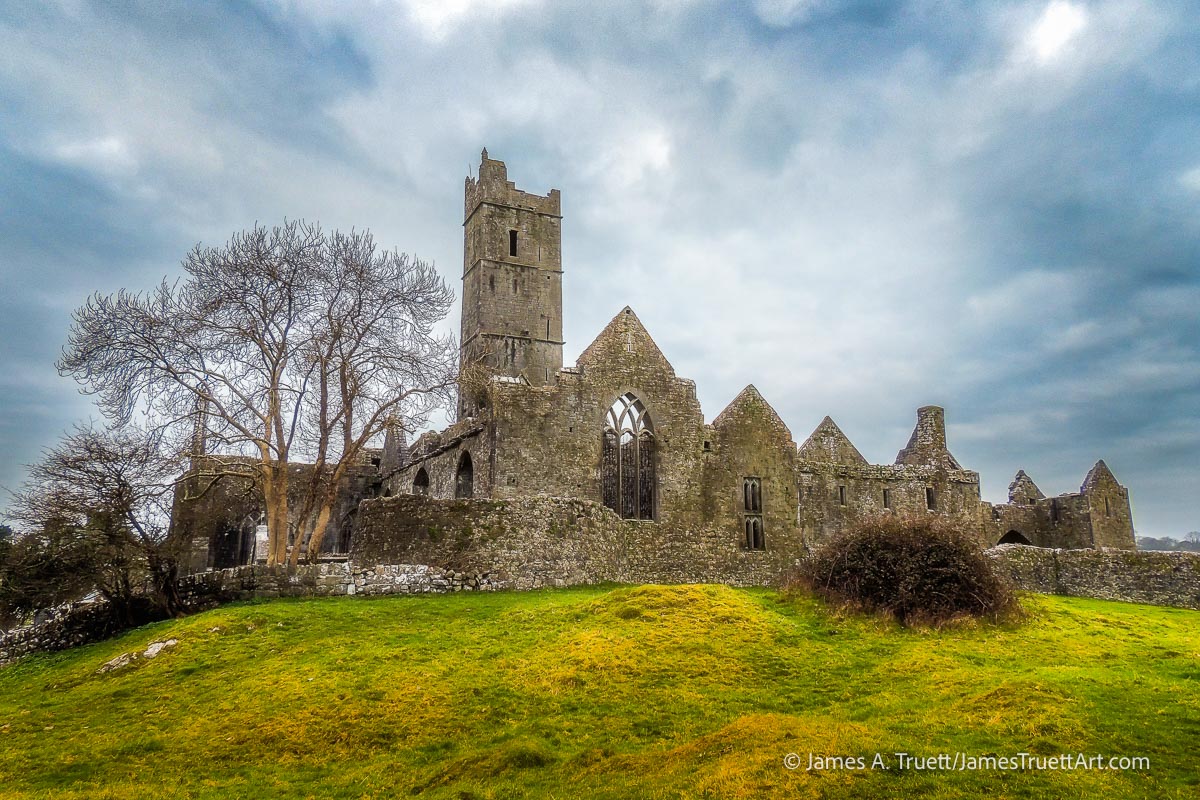
A religious building on the site was destroyed by fire in 1278. Soon afterwards, the Anglo-Norman lord Thomas de Clare built a large castle here, with strong curtain walls and round towers intended to reinforce his power in Thomond.
The fortress did not last. It was attacked and left in ruins, but the stone was not abandoned. Around 1350, the MacNamara clan incorporated parts of the castle into a church. The cloister and other additions followed in the early fifteenth century, and Franciscan friars were established at Quin in 1433.
Remains of the Norman towers can still be seen around the complex. They reveal one of the most interesting things about the abbey: a place conceived for military control was gradually transformed into a centre of prayer and learning.
The friary was suppressed during the reign of Henry VIII and passed to the O’Brien family, although the friars were allowed to remain for a time. After periods of neglect and political turmoil, the MacNamaras and other local families helped restore it.
By the 1640s, Quin had reportedly become an important college with as many as 800 students. Religious scholars from across Europe are believed to have studied here. That period ended violently when Cromwellian forces desecrated the friary in 1651.
The Franciscans returned once again, but the community never fully recovered its former standing. The last friar died in 1820, and Quin Abbey came into state care as a National Monument in 1880.
Its history is not a straight path from foundation to ruin. It is a repeated story of building, destruction, return and adaptation.
The Quiet Work of the Cloister
The cloister remains the heart of Quin Abbey for me.
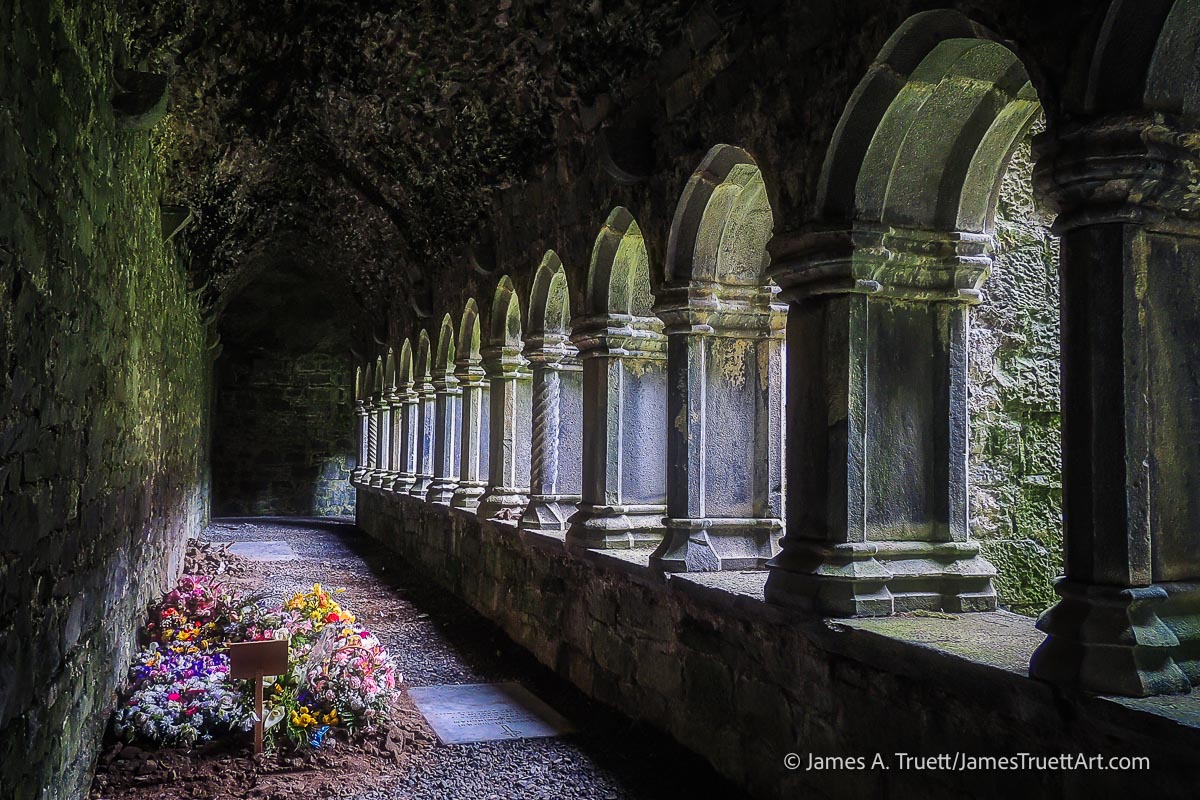
Its carved openings create a procession of stone frames around the central square. Standing there, I often imagine the friars and students working along these passages, reading or preparing manuscripts as daylight entered through the sculpted columns.
Today, those same halls contain graves.
That contrast can be unsettling. A place once filled with intellectual and religious activity now carries the names of people who came centuries later. The surrounding graveyard remains in use, so Quin is not merely an archaeological relic. It continues to belong to the community around it.
One of the most affecting scenes I encountered there was sunlight spilling through the cloister onto a freshly adorned grave. Life, remembrance and deep history occupied the same small patch of light.
That was when I understood why the abbey never feels entirely abandoned.
Returning in Different Light
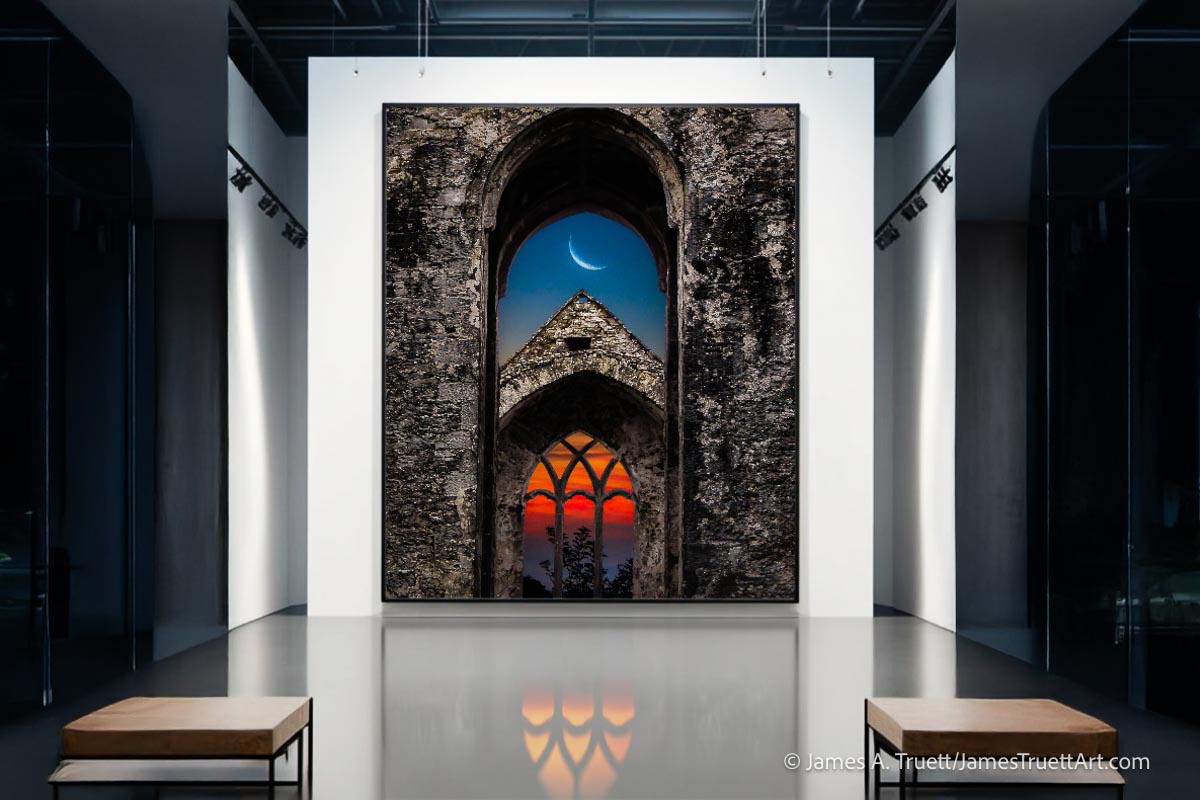
Over the years, Quin Abbey has found its way into my photography and composite artwork. Its carved windows and doorways became frames through which I could bring different moments together: an iris in a Clare meadow, cherry blossoms near the village, a crescent moon above the ruins or a full moon illuminating a Celtic cross.
One work from my Portals Through Time: Irish Doorways and Windows book places a crescent moon over the abbey at sunset. Its original digital edition eventually entered a private collection in Costa Rica. Other Quin images appeared in my books and in an issue of Awesome Ireland Magazine devoted to Ireland’s historic abbeys and monasteries.
The recurring subject was never simply the building. It was the meeting of different times—the medieval stone, the present landscape and the changing sky.
What the Ruins Preserve
When I first visited Quin Abbey, I thought mainly about what had disappeared: the roof, stained glass, manuscripts, voices and daily rituals.
After many visits, I began to notice what remained.
The castle survives within the friary. The friary survives within the graveyard. The past survives within a village still brightened by flowers and ordinary life. Even the empty windows have acquired a new purpose, admitting rain, birdsong, moonlight and the shifting colours of the Clare sky.
Quin Abbey carries tragedy within its walls, but tragedy is not its only legacy. Its deeper story is one of endurance—and of light continuing to enter wherever an opening remains.