Lake Knockalough: Mist, Memory and an Island Refuge
There are mornings when Lake Knockalough seems reluctant to reveal itself.
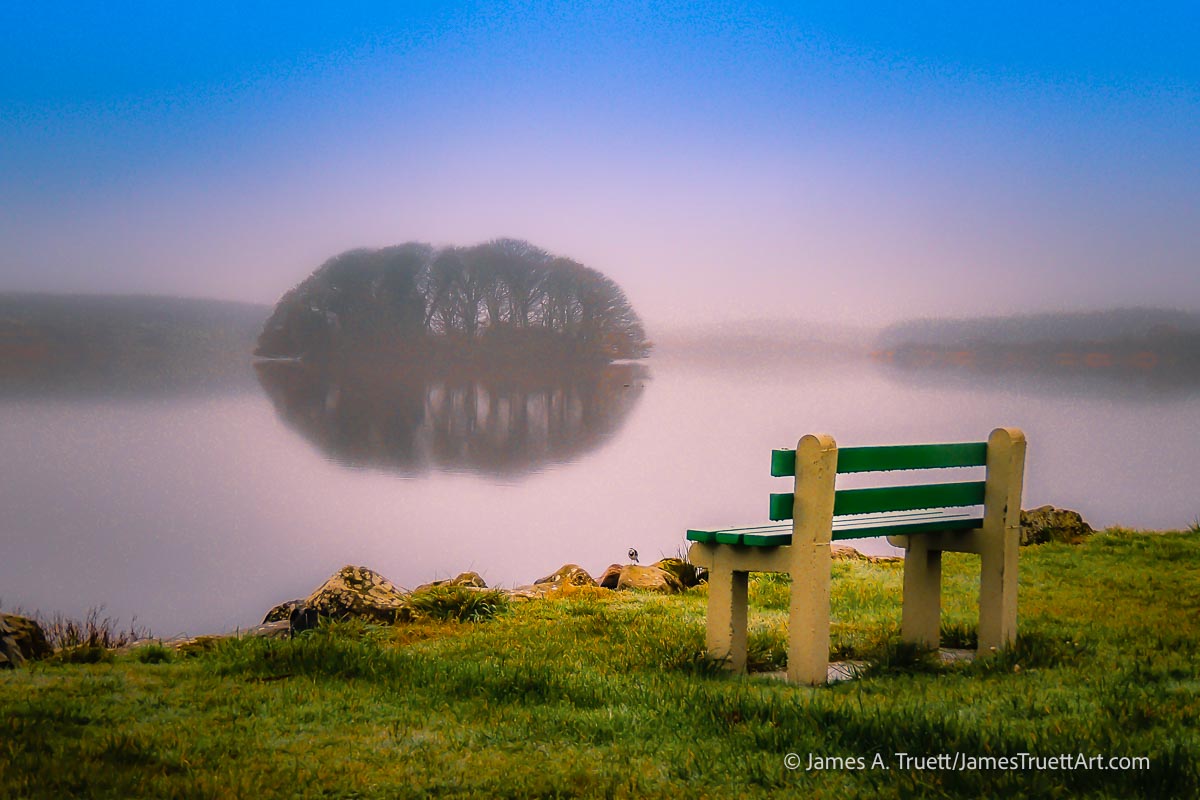
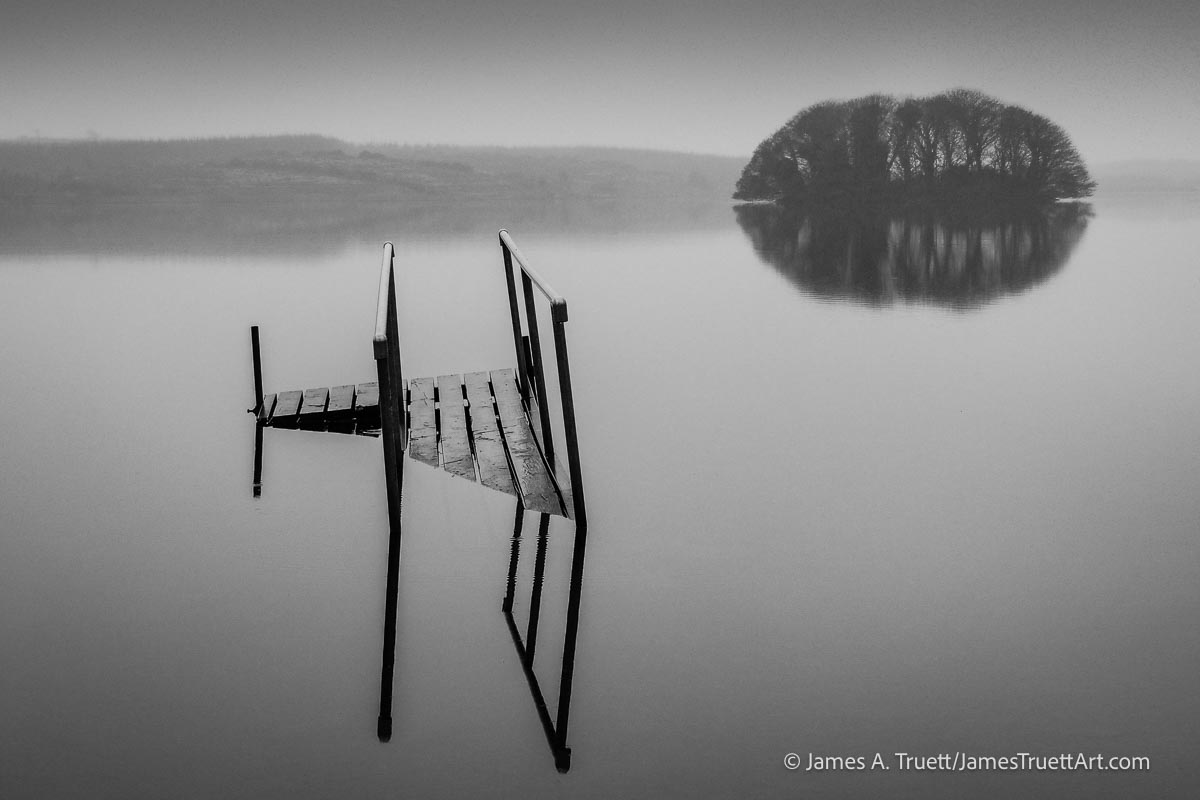
Mist drifts across the water, softening the shoreline and reducing the world to a few quiet elements: a weathered dock, the reflection of autumn trees and a small wooded island floating somewhere between water and sky. On mornings like these, the lake feels much farther from home than it really is.
Knockalough lies near Kilmihil in County Clare, and it has long been one of my favourite places when I need to step away for a while. It is not a grand lake, nor does it depend upon dramatic scenery to hold your attention. Its appeal is quieter. You begin noticing the changing light, the movement of birds and the way each season gives the water an entirely different character.
A Lake for Every Season
Most of my early visits were during autumn and winter, when mist frequently settled over the lake, and the last leaves added muted colour around the shore. The still water could turn the smallest detail into a composition: a half-submerged dock, a bare branch or a distant swan leaving a widening trail behind it.
Spring transforms the same scene. The surrounding countryside brightens with fresh green, while gorse—also known as furze or whin—covers the banks in yellow. It flowers throughout much of the year, but under a clear spring sky it seems to light the entire landscape.
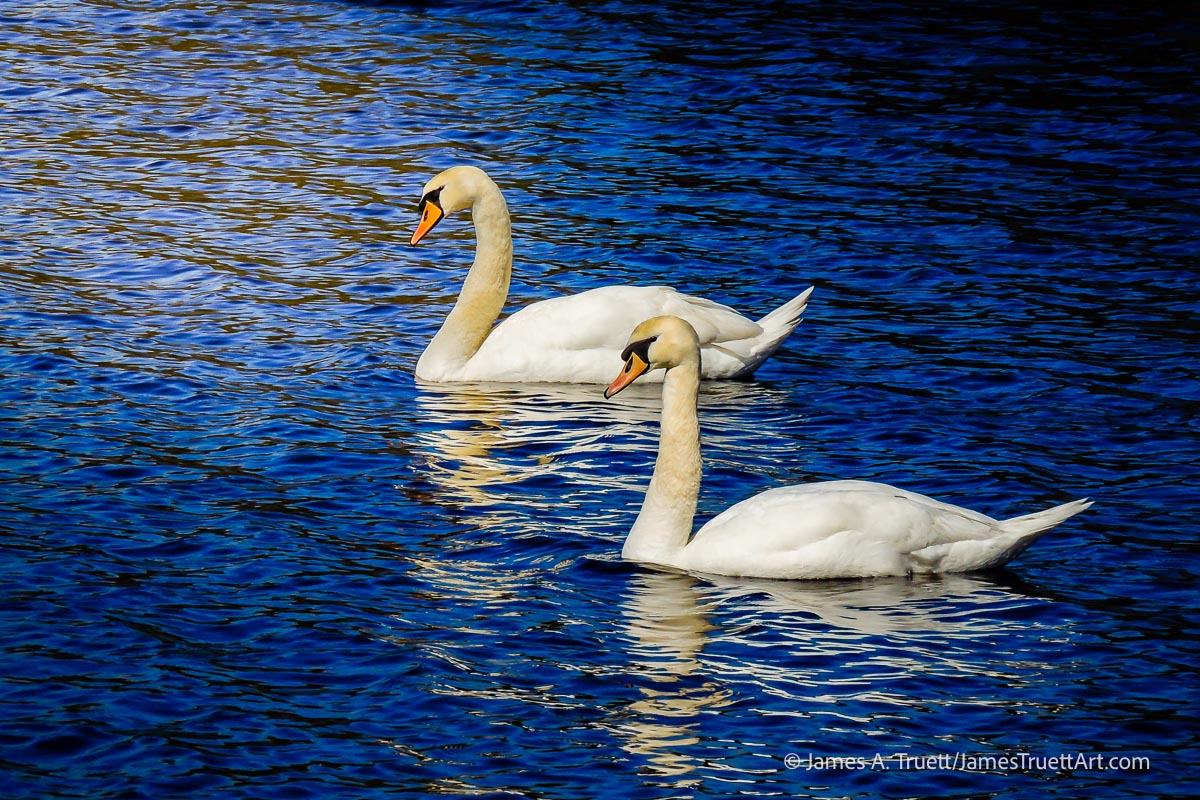
Summer brings another rhythm. Swans and ducks move across the open water, and cormorants sometimes claim the rocks and piers. I once watched a cormorant standing in the sunshine with its wings spread wide, drying its feathers between fishing expeditions. It looked almost heraldic, as if it had been placed there to guard the lake.
Knockalough remains a popular place for birdwatching, walking and quiet recreation, while its brown and rainbow trout have long attracted anglers. Yet the feature that continually draws my eye is the little island near its centre.
The Island in the Mist
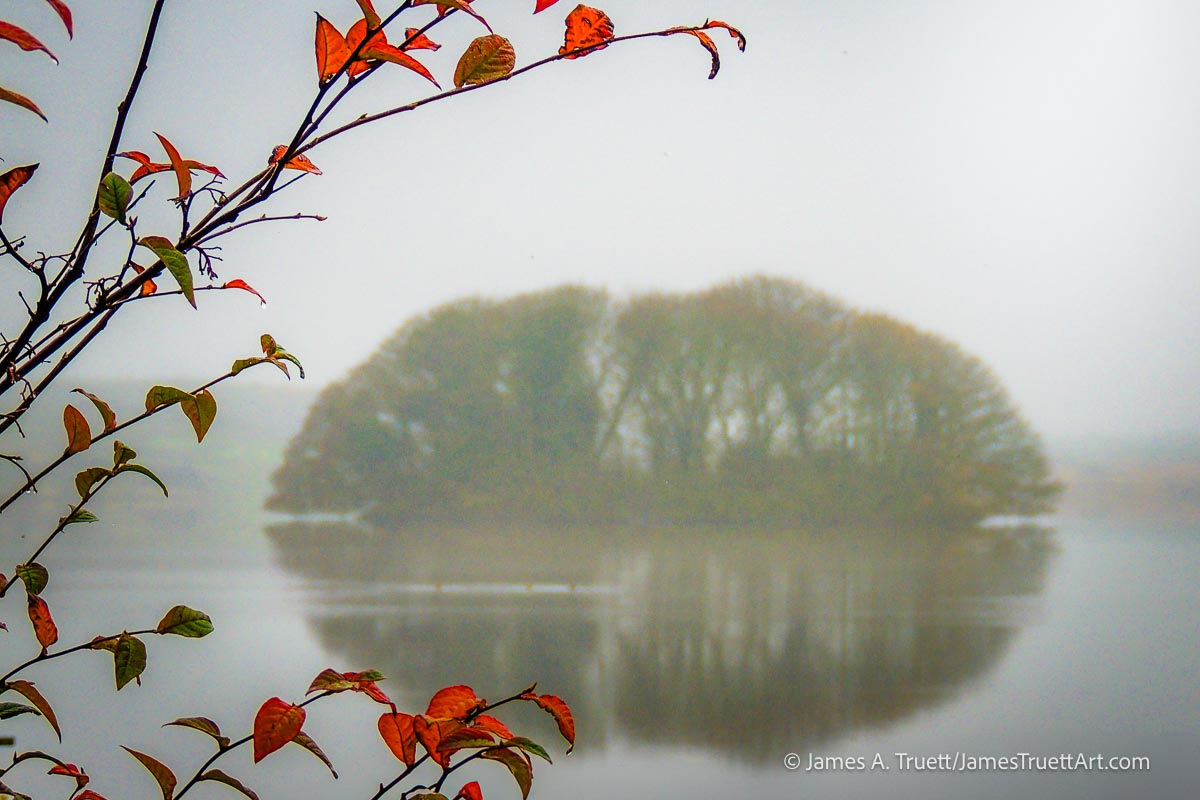
The wooded island is believed to be a crannog—a man-made or modified lake island associated with earlier settlement and defence. The water surrounding such islands provided a natural barrier, making them useful as protected dwellings or places of refuge.
Calling a crannog a medieval “panic room” may not be archaeologically precise, but it gives a useful sense of the idea. When danger approached from the shore, water offered an additional line of protection.
The island at Knockalough still holds the remains of a small tower house known as Knockalough Castle. Local tradition associates it with Turlough Roe MacMahon, a figure whose name survived in West Clare folklore long after the details of his life became entangled with legend.
Whether every part of that story is history, folklore or some mixture of the two matters less to me than the fact that the island has remained in the local imagination. It is not simply a patch of trees surrounded by water. It carries the memory of people who once looked across the same lake and saw safety, uncertainty and home.
Seeing the Lake from Above
Photographing Knockalough from the shoreline, I was always aware of the island as a distant presence. It would appear through the mist or sit in reflection beyond the dock, revealing only as much as the weather permitted.
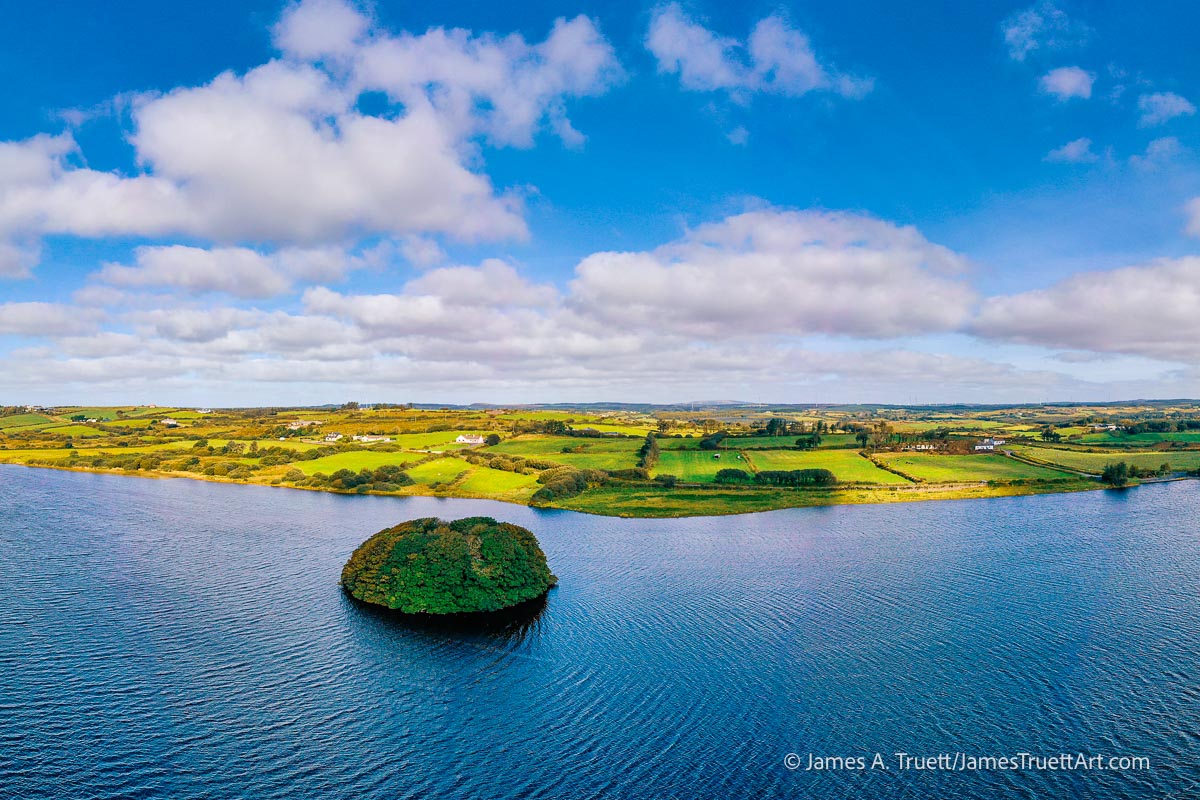
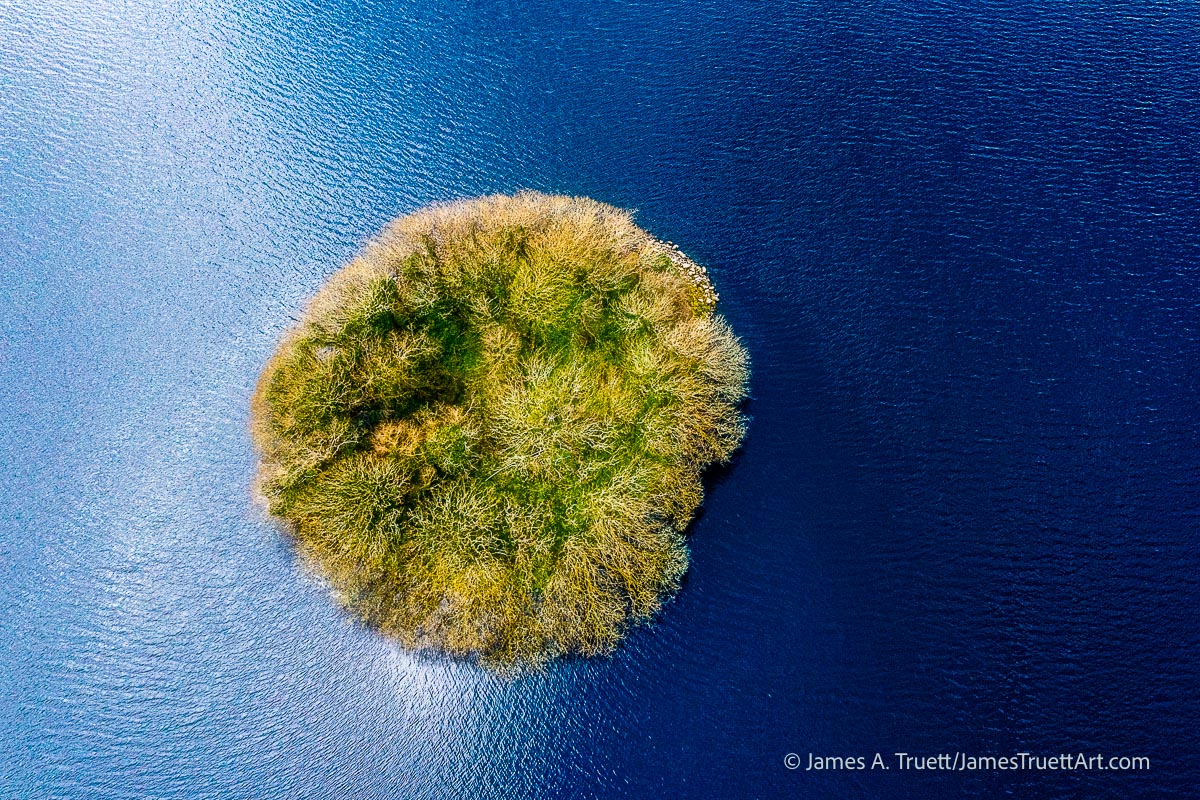
An aerial view changed my understanding of it.
From above, the relationship between the island and the surrounding water becomes immediately clear. The lake is no longer just a peaceful foreground. It becomes a moat, a boundary and a form of protection. The smallness of the island is striking, but so is the distance separating it from the shore.
That was the moment when history became more than an interesting fact. The landscape itself began explaining the story.
It is one of the reasons I return so often to familiar places with a camera. A change of season, weather or viewpoint can reveal something that was present all along. The subject has not changed; I have simply found another way to see it.
More Than a Quiet Escape
Today, Lake Knockalough is partly developed as a local amenity, with places to park, picnic and spend time beside the water. It has hosted fishing, family outings and community events, including Kilmihil’s summer raft race.
Those everyday uses are part of the lake’s character. History here has not been separated from ordinary life. Children feed the birds, anglers watch their lines, families gather near the shore, and the old island remains in the middle of it all.
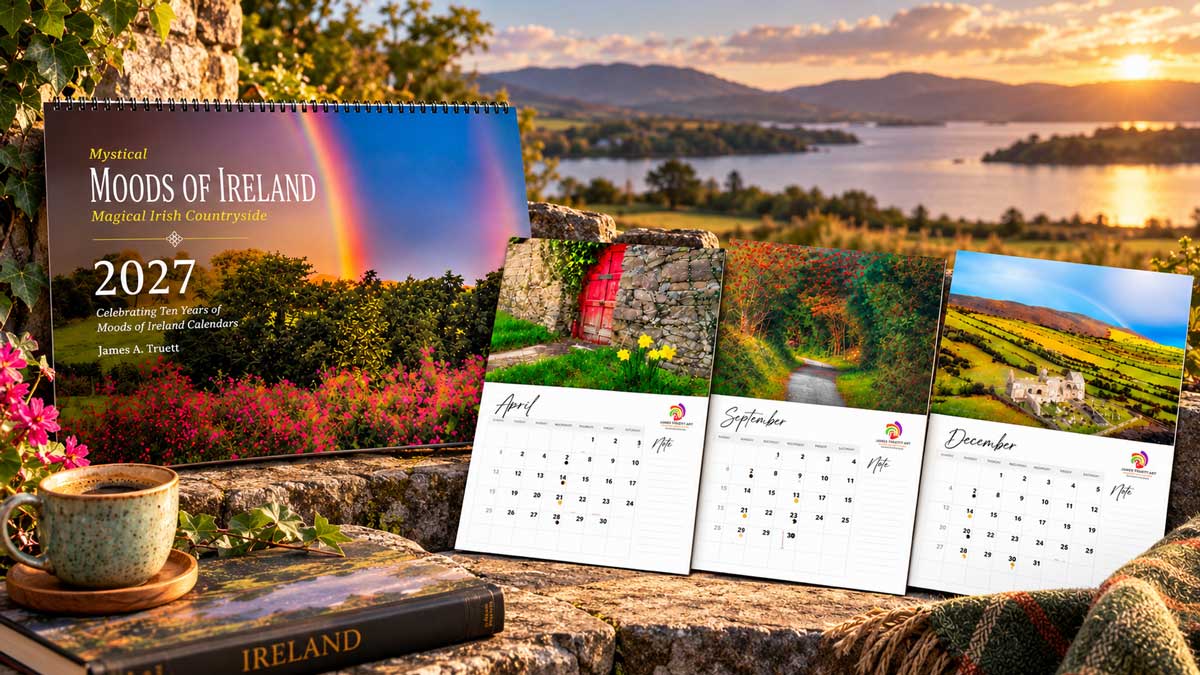
Several of my photographs of Knockalough—including its mist-covered crannog and the cormorant drying its wings—appear in Magical Irish Countryside, the third volume in my Mystical Moods of Ireland series. They belong together because they show more than one version of the lake. There is the lake of spring colour, the lake of autumn mist, the lake of birds and reflections, and the much older lake whose waters once offered protection.
Perhaps that is what keeps bringing me back. Knockalough rewards attention rather than demanding it. Stand beside the water long enough, and the scene begins to open: first the reflections, then the wildlife, then the island and the human stories held within it.
Sometimes the most memorable landscapes are not the ones that overwhelm us at first sight. They are the ones that quietly give us another reason to look.