Halloween in Ireland: Samhain, Old Stones and Strange Encounters
I was making my way down the narrow stairs inside Newtown Castle when I felt it: a light but distinct push in the middle of my back.
There was no one behind me.
I had climbed to the upper floors of the restored 16th-century tower house near Ballyvaughan, taking my time as I explored and photographed the unusual round castle. Newtown is now part of the Burren College of Art and is open to the public. I had been doing what I always do in an old place, looking at the light, the stone and the possibilities for an image.
Then came that push.
For a moment I nearly lost my footing. I made it safely down, but I left feeling that something had been encouraging me, rather firmly, to get out.
Was it a ghost? A trick of balance on a steep stair? I cannot tell you. I only know what I felt.
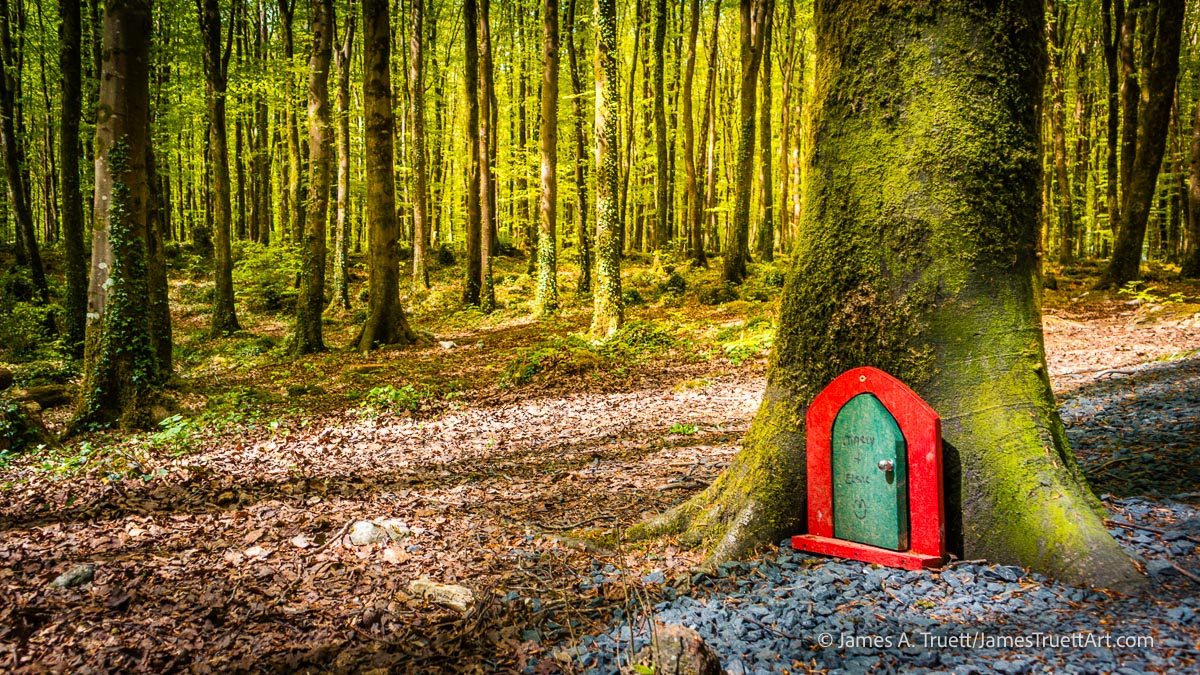
When the Dark Half of the Year Begins
Halloween feels at home in Ireland because so many of its traditions grew from the old Gaelic festival of Samhain. Observed at the beginning of November, Samhain marked the end of the harvest and the opening of winter, the darker half of the year. As with several traditional Irish festivals, the celebrations began on the evening before.
This was a time of bonfires, feasting, games and divination, but also of caution. Folklore held that the boundary between this world and the Otherworld became less certain. The dead might return home. Fairies and other beings were abroad. People disguised themselves, protected their homes and avoided places believed to be frequented by supernatural forces.
Carved turnips lit from within once served as frightening lanterns in Ireland. The pumpkin came later, after Irish traditions crossed the Atlantic and found a vegetable that was much easier to hollow out.
Modern Halloween has gathered many influences over the centuries, including the Christian observances of All Saints' and All Souls' days. Yet beneath the costumes and sweets, something of the older season remains: the sense of standing at a threshold.
Red Mary and the Birds of Leamaneh
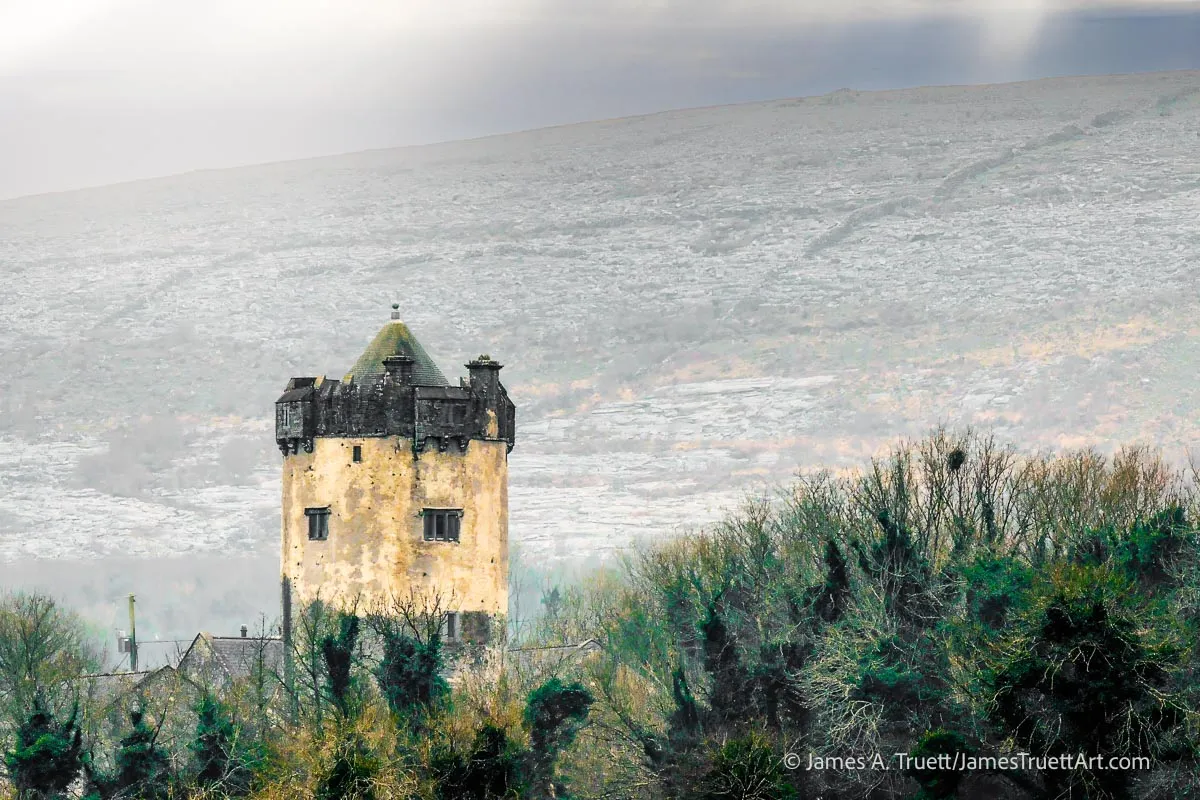
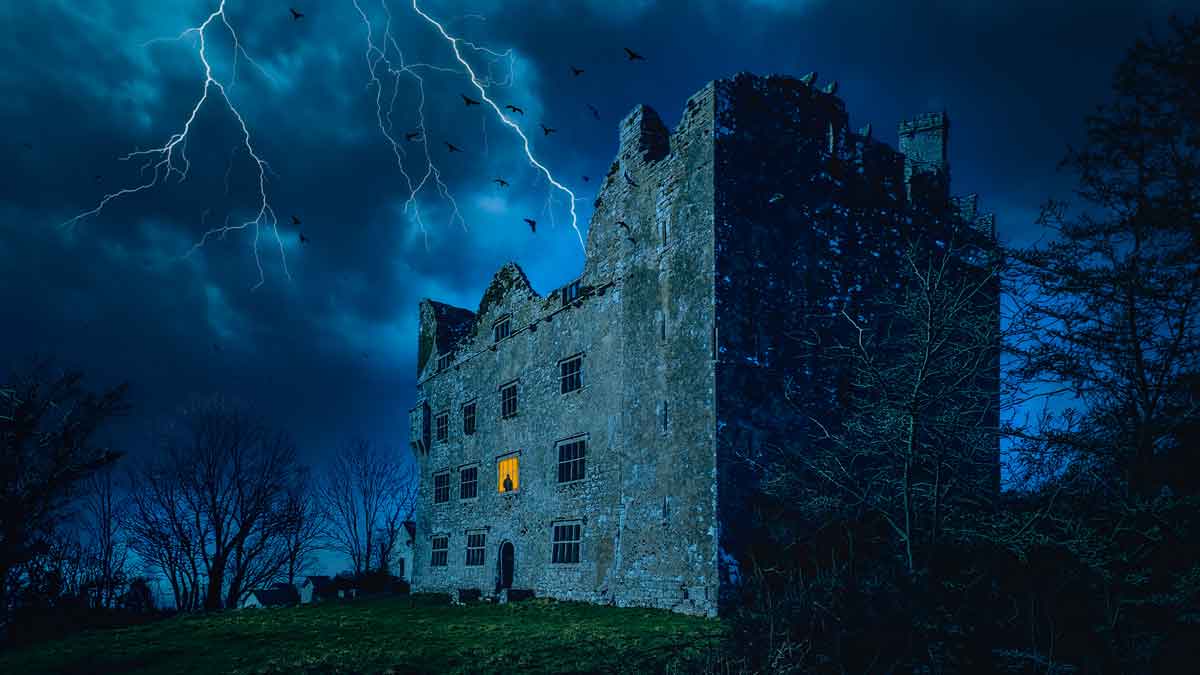
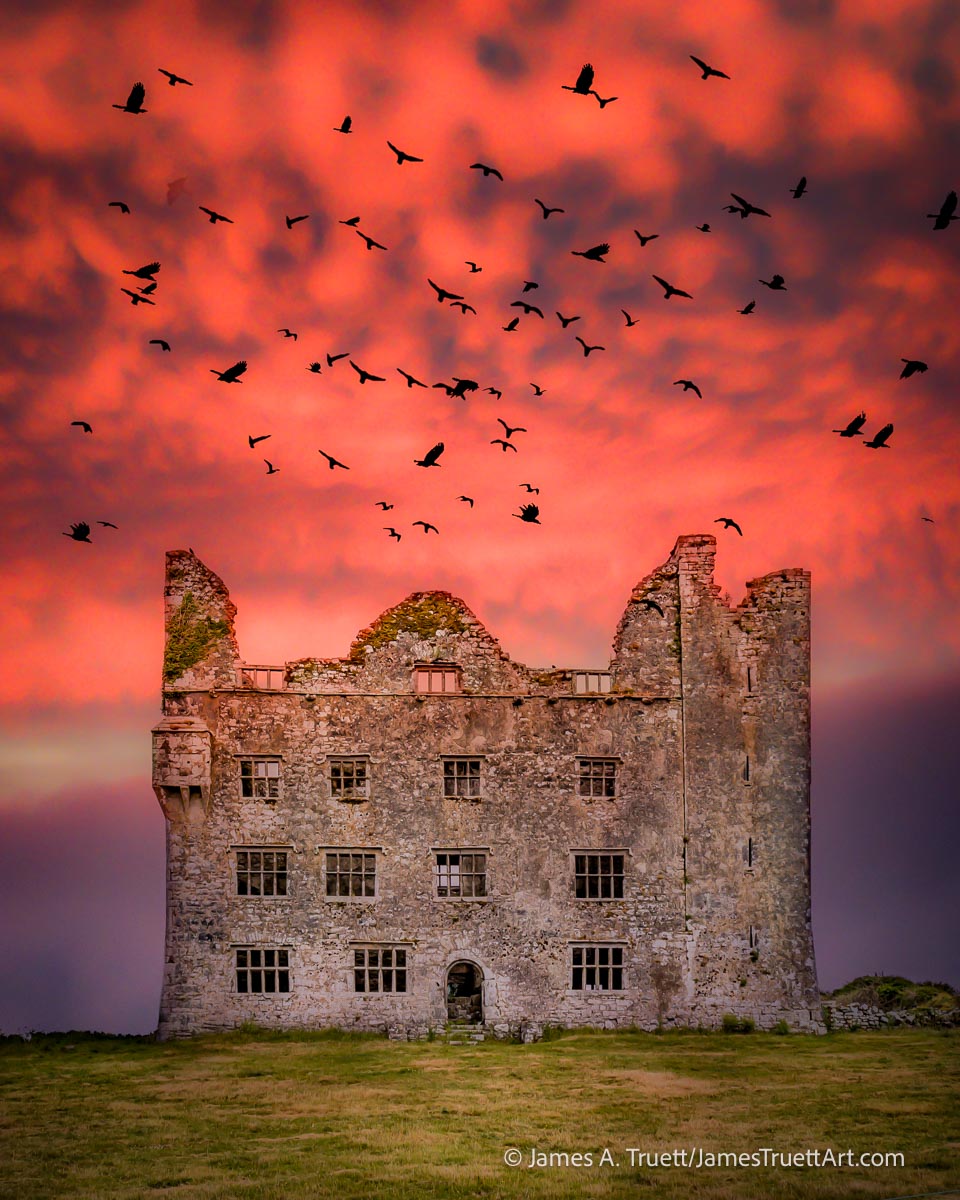
Leamaneh Castle, on the edge of the Burren in County Clare, looks perfectly suited to a Halloween story. The ruined tower and manor house rise starkly from the limestone landscape, and birds wheel above the empty windows.
The documented history is dramatic enough. Maire Rua MacMahon, remembered in English as Red Mary, married Conor O'Brien of Leamaneh, and together they enlarged the residence in the 1640s. After Conor was killed in 1651, she married the Cromwellian officer John Cooper, apparently in an effort to protect her family and property.
Then folklore took over.
Generations of stories turned Maire Rua into a cruel, red-haired spectre who still roams the ruins. The more lurid tales are difficult to separate from invention, and I would not present them as biography. But legends have a way of attaching themselves to a place, especially one as weathered and exposed as Leamaneh.
My image of the castle, with the flock circling overhead, holds that tension for me. The birds are real. The history is real. The haunting belongs to the story. Together, they create an atmosphere that is hard to dismiss.
The Dark Room at Quin Abbey
Quin Abbey carries a different kind of weight.
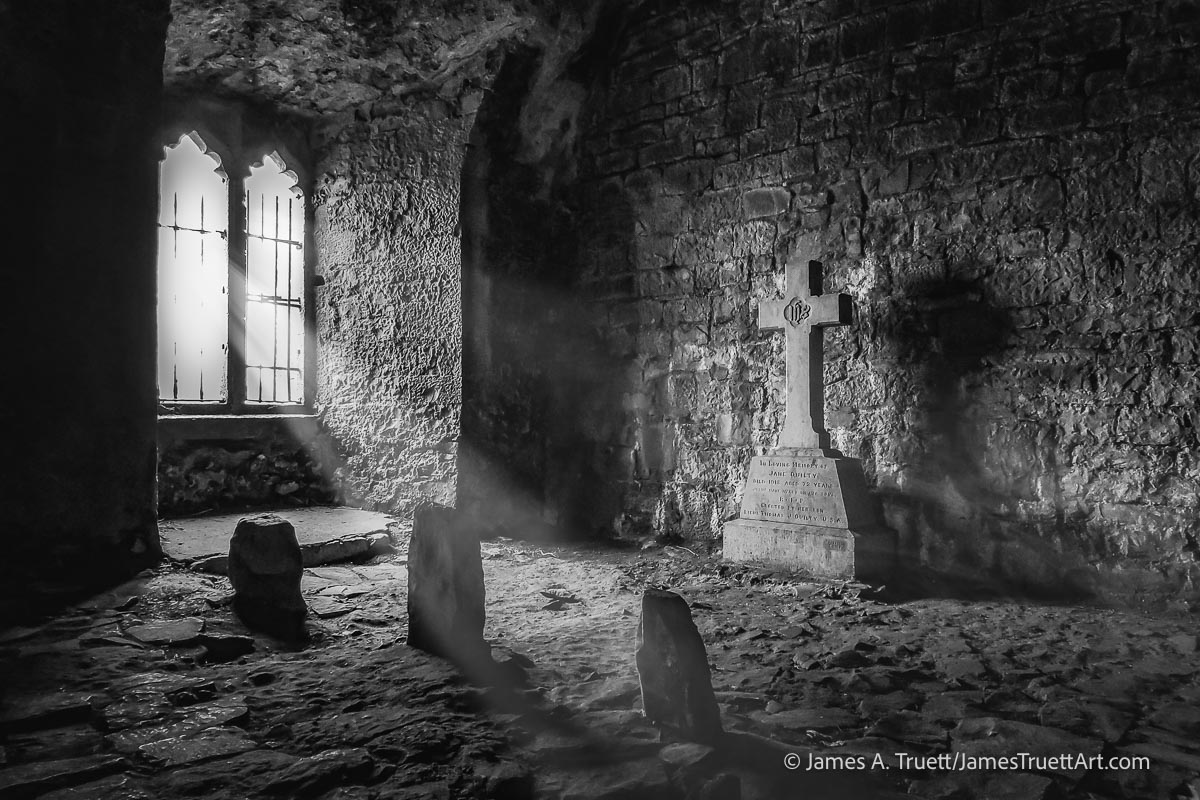
Its history reaches back through a medieval castle, a Franciscan friary, suppression, violence, repair and return. The last friar died there in 1820, and the surrounding graveyard is still in use. Most of the ruins are open to weather and light, but one back room feels markedly different.
It is dark and foreboding, with an extreme heaviness that seems to settle around you. I am not the only visitor who has sensed it. Perhaps the room's shape, temperature and lack of light affect the body before the mind can explain what is happening. Perhaps knowing something of the site's tragedies changes the way we enter it.
Or perhaps old places retain more than we understand.
I have photographed Quin Abbey beneath a boiling dark sky and in gentle light. Its character changes with the weather, but that room has never felt ordinary to me.
Faces in the Streamstown River
My strangest photographic experience happened beside Thoor Ballylee, W. B. Yeats's tower near Gort in County Galway. I call the woodland along the Streamstown River the Faerie Forest, though the established name is the River Walk.
Yeats and his family spent summers at the tower from 1921 to 1929. His lifelong interest in folklore, symbolism, spiritualism and the occult makes the surrounding landscape feel especially appropriate for mystery.
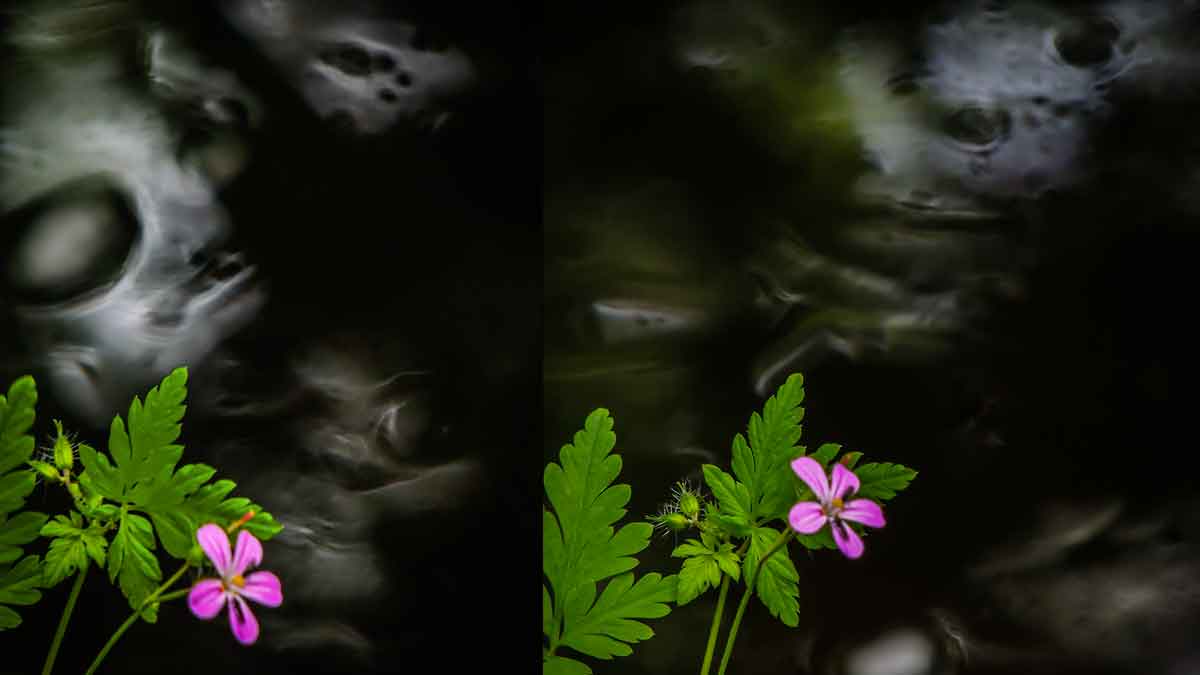
I had gone there in June 2017 to do my usual reconnaissance, searching for unusual colours, contrasts and compositions. Herb Robert and other wildflowers brightened the riverbank. The water moved quietly behind them. I sometimes felt watched and heard slight rustling in the bushes, but I did not give it much thought.
The real surprise came later, when I reviewed the photographs at home.
In several water images, strange shapes appeared to be looking back at me. Some viewers have called them water sprites. Others see faces, alien creatures or the familiar work of light and reflection. Whatever they are, I did not notice them while I was standing beside the river.
I had gone looking for flowers and came home with a bit more than I bargained for.
That landscape later became part of my book, Mystical Moods of Ireland, Vol. IV: In the Footsteps of W. B. Yeats at Coole Park and Ballylee, and it continues to inspire my artwork. The river is beautiful in every season, but I have never looked at those reflections in quite the same way again.
Leaving Room for Mystery
Ghosts from the past? Faeries, water sprites or ancestral spirits? A momentary loss of balance, a dark room working on the senses and patterns formed by moving water?
Who knows?
Ireland's long history includes beauty, faith, conflict, loss and endurance. When I walk through its abbeys, castles and wooded riverbanks, I do not need to decide that every unusual feeling is supernatural. I also do not feel compelled to explain every mystery away.
Sometimes the most honest response is to pay attention.
Look carefully at the old stones. Listen when the bushes rustle. Study the photograph again when you return home. The world may be stranger than we imagine, and beauty often waits in the same places as shadow.