Doneraile Park: Where the River Carries the Story
I first found Doneraile Park because I had some time to spare.
I was visiting a friend in County Cork and began looking for somewhere nearby to explore. Doneraile appeared at the top of the list. I knew almost nothing about it, which may have been part of its appeal. There was no itinerary and no particular expectation—only the promise of walking trails and a few hours in unfamiliar surroundings.
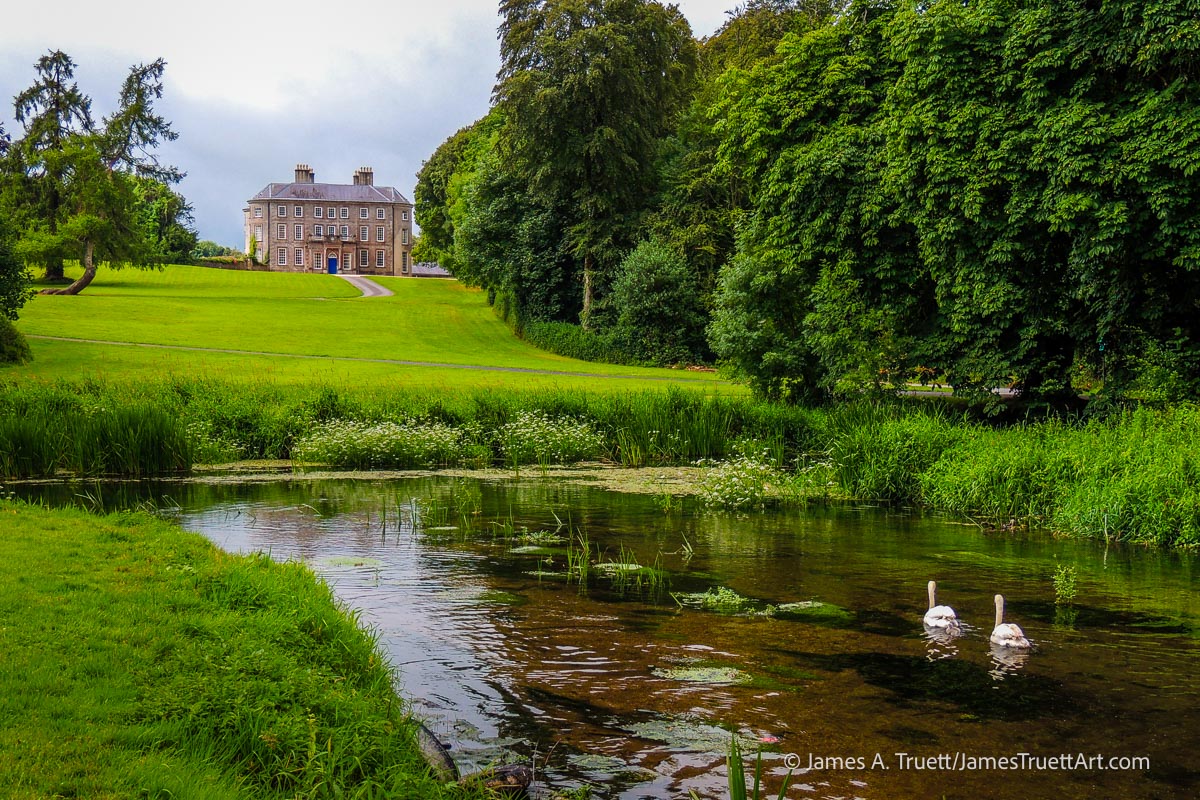
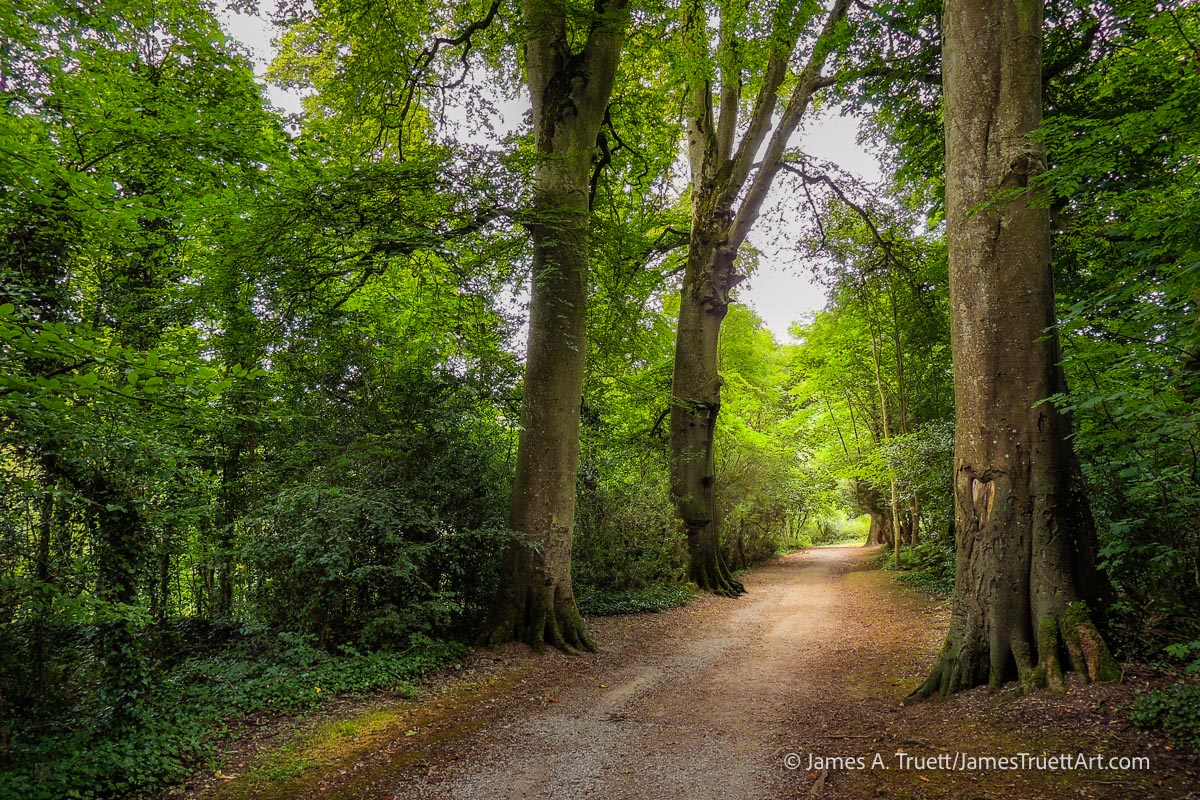
What I found was a landscape that seemed to reveal itself gradually. Paths curved through mature trees. Deer wandered across the greenery. Water appeared and disappeared between the lawns, drawing the eye towards bridges, ponds and quiet bends in the river.
At the centre stood Doneraile Court, wrapped in the signs of restoration. The house was impressive, but it was the relationship between the architecture and the land that held my attention. Nothing seemed isolated. The house, river, trees and open parkland all belonged to the same composition.
Following the Awbeg
The River Awbeg runs through the estate with an easy, unhurried presence. In places, the water widens and slows; elsewhere it passes beneath stone and wooden bridges or feeds the estate’s ponds and channels.
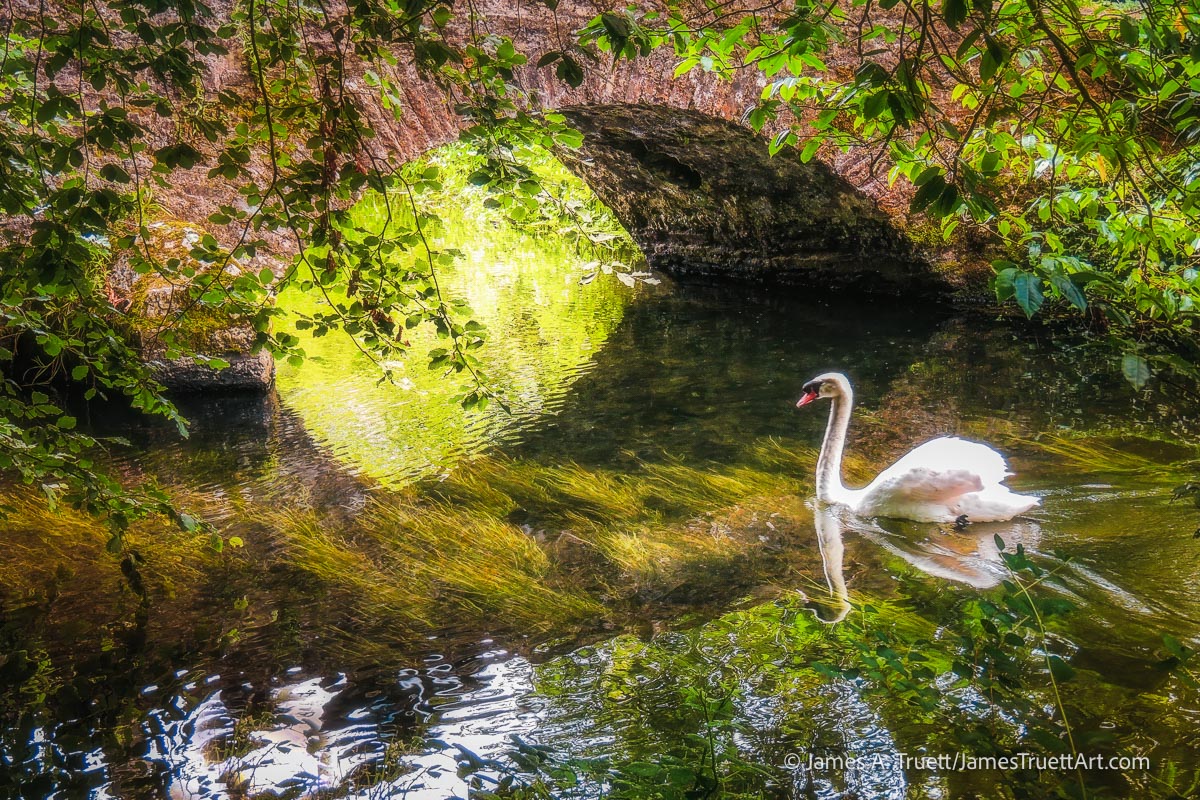
One scene stayed with me more clearly than the others. An elegant swan moved along the calm water in the shadow of an arched stone bridge. The bird’s white form, the dark opening beneath the bridge and the reflections on the Awbeg came together for only a moment, but it felt complete.
I later photographed a swan with her cygnets exploring the river. Deer appeared among the grass and trees, never seeming entirely wild or entirely part of the designed landscape. Even when ominous clouds gathered above the park, the water maintained its quiet rhythm.
The estate encouraged walking without insisting on a destination. One path led to another, and each crossing changed the view. A bridge was not merely a way over the river; it was a place from which to look back at the house, downstream towards the trees or across an open stretch of green.
A Landscape Made to Feel Natural
Doneraile Park extends across approximately 160 hectares, or about 400 acres. Its broad lawns, mature groves, water features and carefully placed views reflect the naturalistic landscape style associated with the eighteenth-century designer Lancelot “Capability” Brown.
That description can be misleading if it suggests untouched countryside. This is a landscape that was shaped with great care to appear relaxed. Water was directed, trees planted, views opened and routes established so that the estate would unfold as a sequence of scenes.
The result does not feel rigid. Large areas of green are punctuated by the Awbeg, canals, ponds and bridges. Mature oak, beech, lime and chestnut trees give depth to the park, while herds of red, fallow and sika deer introduce movement.
That balance between planning and apparent ease may explain why Doneraile feels so immersive. It is possible to enjoy it simply as a place for a walk, yet the deeper one looks, the more clearly its centuries of decisions become visible.
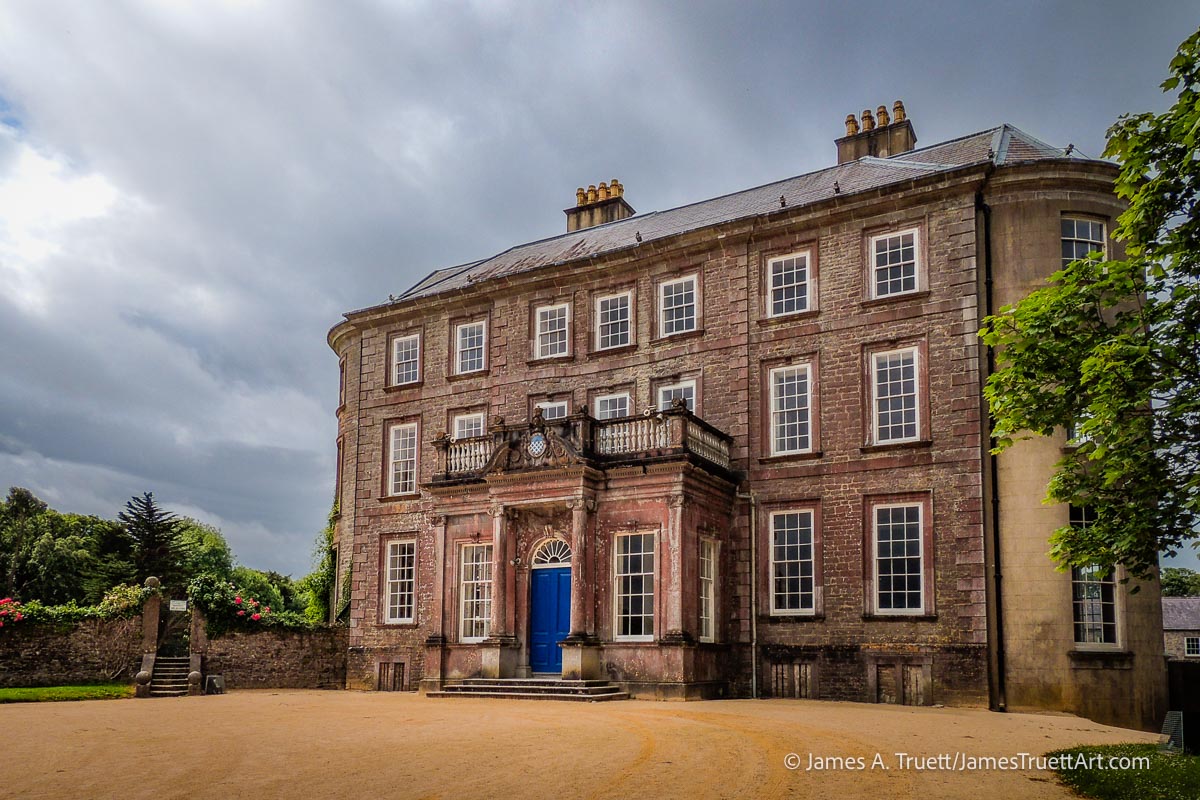
The House at the Centre
The St. Leger family acquired the estate in the seventeenth century. The present Doneraile Court developed from a house built on or near the remains of an earlier castle, with the principal Georgian house constructed in the 1720s and altered by succeeding generations.
Thirteen generations of the family lived at Doneraile over roughly three centuries. The house expanded, fashions changed and new buildings appeared around the estate. Lodges, stables, cottages, garden structures and bridges became part of the wider working landscape.
By the time of my 2014 visit, Doneraile Court was undergoing restoration. There was something compelling about seeing that process from outside. The house was not being presented as an untouched survivor. Its condition made the passage of time visible.
The ground floor reopened to visitors in 2019 after major conservation work by the Office of Public Works. Further work later made the first floor accessible and created new exhibition spaces. Knowing this now changes how I remember the house. What I saw was not a building fading into history, but one in the middle of being returned to public life.
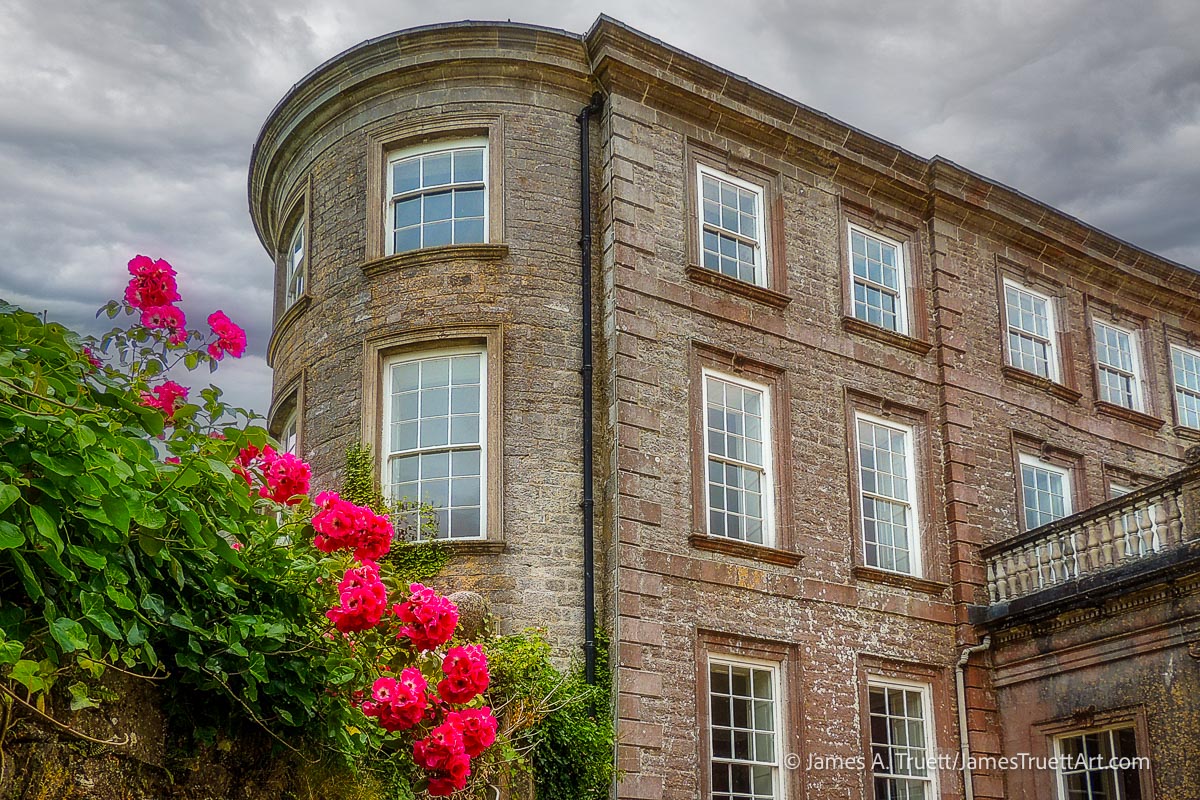
The Lady Freemason
My curiosity about Doneraile continued after I left, particularly when I began reading about Elizabeth St. Leger, later Elizabeth Aldworth.
According to the historical tradition, she overheard or secretly observed a Masonic lodge meeting held in the family home early in the eighteenth century. Once discovered, she was initiated so that she would be bound by the lodge’s obligations of secrecy.
She became known as the Lady Freemason and is widely regarded as the first recorded woman admitted into regular Freemasonry. Some details vary between accounts, including the precise year and how she witnessed the meeting, but her association with Doneraile is firmly established.
It is the kind of story that changes how one sees a quiet room in an old house. The architecture begins to hold more than dates and decorative features. It contains moments of curiosity, risk, family influence and unexpected departures from convention.
What Remains in the Picture
The photograph of the swan beneath the arched bridge later appeared in my book Mystical Moods of Ireland, Vol. III: Magical Irish Countryside. At the time, I was responding primarily to the stillness of the scene—the white bird on dark water, the weight of the old stone and the soft landscape beyond it.
Research added another layer, but it did not replace that first impression.
This is what I continue to value about places such as Doneraile. History can explain who built the house, how the landscape changed and which lives left their mark. Yet the first connection is often much simpler: a path chosen without a plan, a deer moving through the grass or a swan gliding beneath a bridge.
I arrived because I had time to kill. I left with photographs, questions and a place that continued to occupy my imagination long afterwards.
Sometimes discovery begins with nothing more complicated than deciding to take the next path and paying attention to where it leads.
Explore my Moods of Ireland collection for more artwork inspired by Ireland’s landscapes, waterways and historic places.